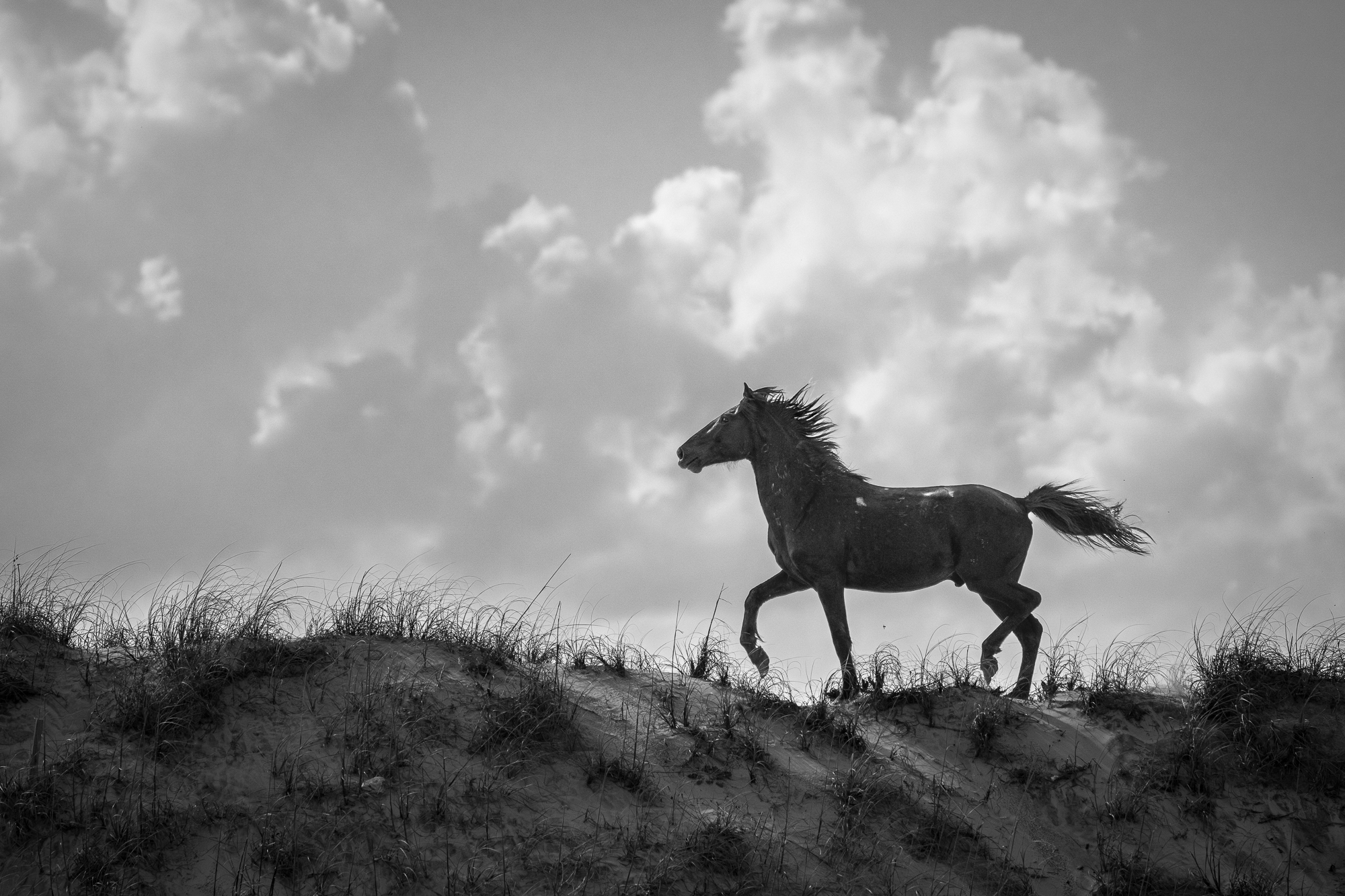
Alert Stallion
North Carolina, USA
For more than 500 years wild Spanish Mustangs have roamed freely on the northernmost Outer Banks, in the Currituck National Wildlife Reserve. These horses descended from a herd brought here by explorers as early as the 1520s, and they're recognized as the state horse of North Carolina. These are the only remaining wild herd of its kind left in the world.
But it is unclear how they actually got to Currituck. The shallow nature of the coast off this region of NC, and the unpredictable sandbars, have caused the area to be known as the Graveyard of the Atlantic. It is said that some horses swam ashore from shipwrecks, while others were castoffs of failed settlements. DNA tests confirm that these horses are derived directly from Spanish stock from the 16th century. Their legs are short, their bodies stocky and their fur fluffier than domesticated horses.
Here on these outer banks, only the strongest survive. These hardy horses must weather harsh conditions, hurricanes, storms, and a growing human presence. Their diets are narrow and their health precarious. They wander about, eating grass, sea oats, live oak tree leaves or persimmons.
Mid-April to the end of May is the mating season of the horses. Stallions regularly break into battle over mares, food and resources. This stallion parades the dune-line, fending off any who challenge his domination of the herd.
Photo © copyright by Dr. Edward Mikol.
Photo Prints
Metal Prints
Canvas Prints
Acrylic Prints