
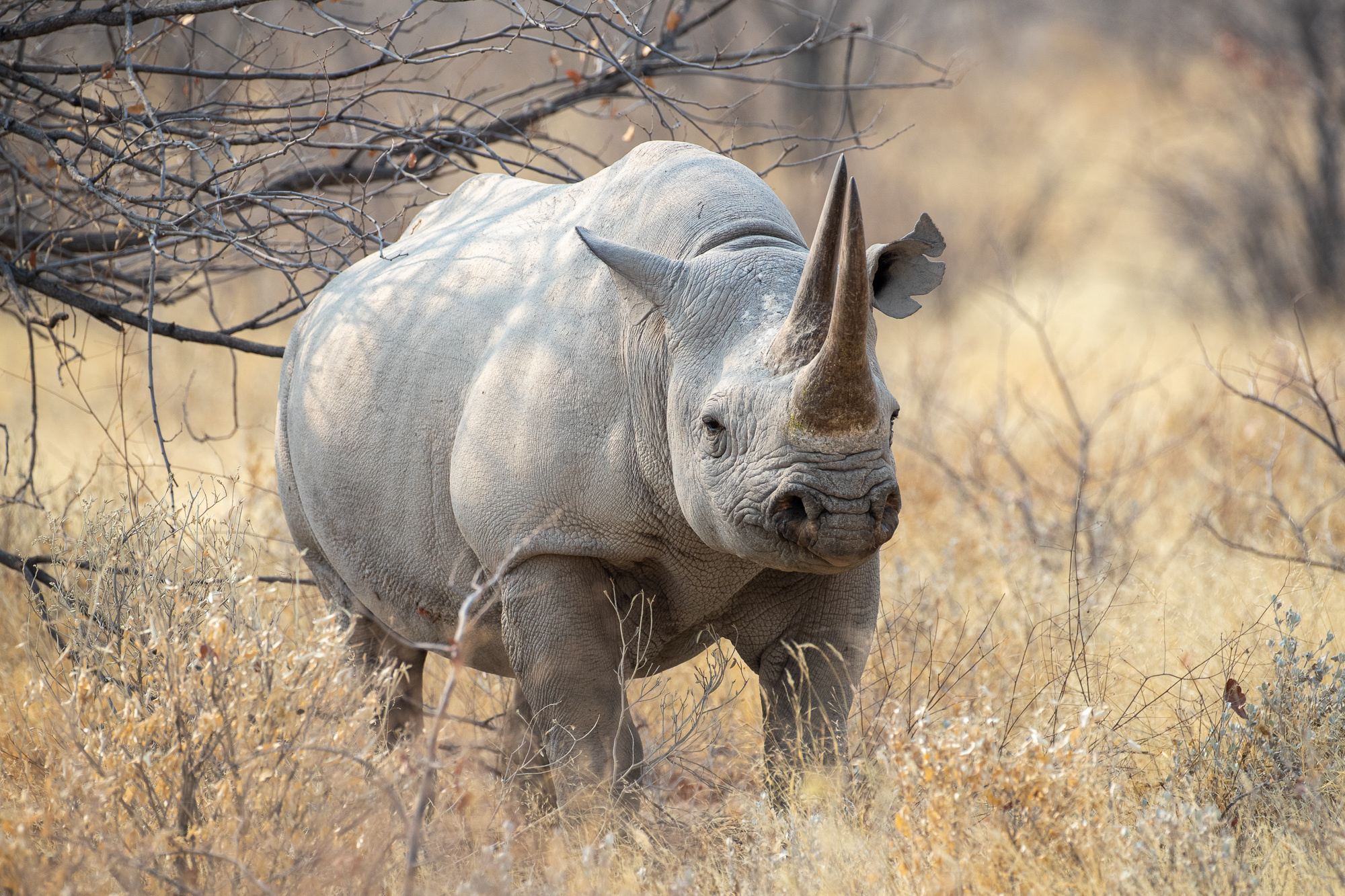
Black Rhinoceros
Namibia, Africa
The Black Rhinoceros (Diceros bicornis) gets its name from the Greek “di”, meaning “two” and “ceros”, meaning “horn”. Unfortunately, these two horns make it a target of poachers. As a result, black rhino populations suffered a drastic decline at the end of the 20th century, having lost 96% of the population between 1970 and 1990. Rhino horn is usually smuggled overseas, mostly to Asia, where it is used in traditional medicine. It is also touted as a hangover cure and has become a status symbol.
Poaching continues, despite the fact that a rhino horn is largely composed of keratin, the same protein that makes up human fingernails and hair. The horn grows in layers from skin cells that are later keratinized. At the center of the horn are layers of calcium and melanin that strengthens the horn. There is no scientific basis for any medicinal claims.
It remains critically endangered, but there is some hope. Intense anti-poaching efforts and strategic translocations to safer areas have allowed the species to slowly recover. The African Rhino Specialist Group (AfRSG) of the IUCN’s Species Survival Commission (SSC), estimates a 12% growth in black rhino populations in recent years, from approximately 5,495 individuals in 2017, to more than 6,000 today.
Not having seen a black rhino up close in the wild for many years, I was happy to have the chance to work with this cooperative subject in Etosha National Park in Namibia.
Photo © copyright by Dr. Edward Mikol.
Photo Prints
Metal Prints
Canvas Prints
Acrylic Prints