
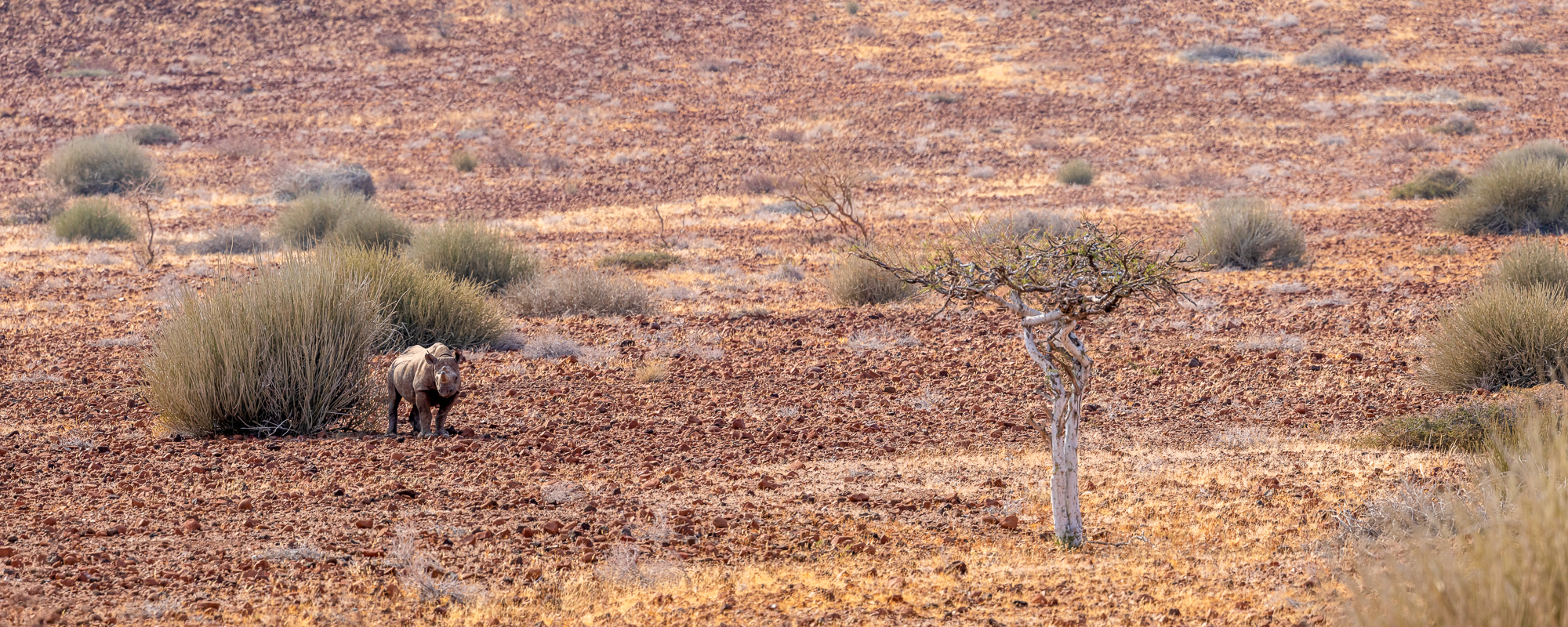
Desert-adapted black rhino among Euphorbia Bushes
Namibia, Africa
Damaraland in Northwestern Namibia, lies just East of Skeleton Coast National Park and receives very little rainfall. Yet this surreal basalt landscape is home to nearly 70% of the world’s population of free-ranging black rhinos such as this one in the Torra conservancy.
Mostly nocturnal to avoid the excessive heat of the day, these rhinos are usually solitary, patrolling territories up to 500-600 square kilometers. Their horns are generally longer and thinner than typical black rhinos to help them forage in these barren environments.
With limited food and water in this environment, rhinos feed mostly on the drought resistant Euphorbia damarana bush which survives well in this harsh, arid, rocky terrain. Euphorbia produces thick, milky sap toxic to most species but rhinos, gemsbok and kudus can eat it without ill-effects.
If it weren’t difficult enough for these rhinos to survive, even in this remote location poaching remains a threat. This rhino has been dehorned to increase its chances of survival. Rhinos in the Torra conservancy are protected by a dedicated group of individuals who look over this population.
Photo © copyright by Dr. Edward Mikol.
Metal Prints
Acrylic Prints