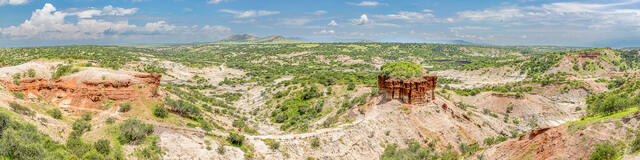
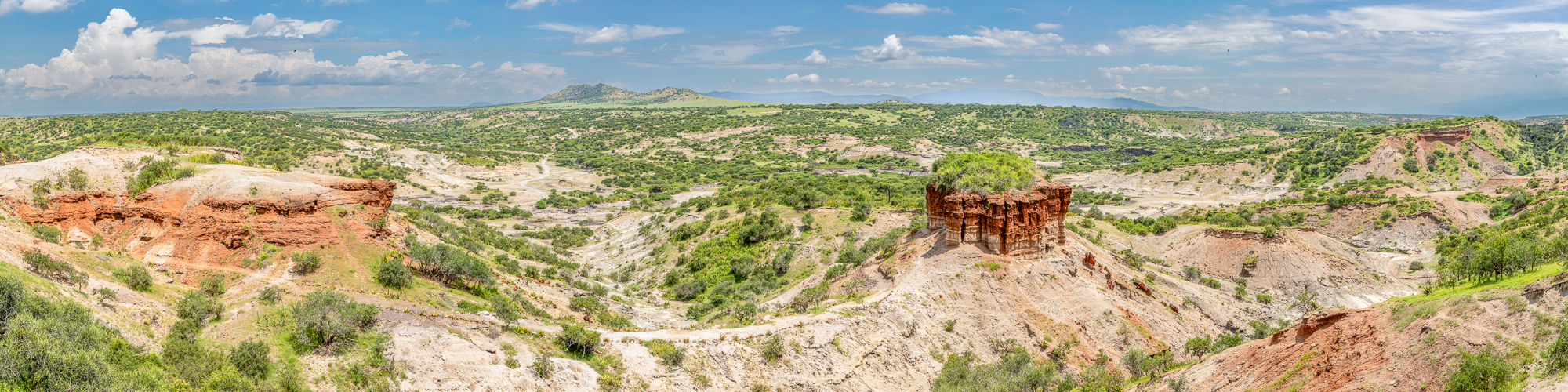
Olduvai Gorge
Tanzania, Africa
Olduvai Gorge, also known as Oldupai Gorge, is a paleoanthropological site in the eastern Serengeti Plain in northern Tanzania. It is a steep-sided ravine in the Great Rift Valley that stretches across East Africa for about 48 kms. Deposits exposed in the sides of the gorge cover a time span from about 2.1 million to 15,000 years ago. These deposits have yielded the fossil remains of more than 60 hominins (members of the human lineage), providing the most continuous known record of human evolution during the past 2 million years. It is also an important archaeological record of the development of stone tools. Olduvai Gorge was designated part of a UNESCO World Heritage site in 1979.
There are seven major formations that have been distinguished. From the oldest to the youngest they are: Bed I (about 1.7 million to 2.1 million years old), Bed II (1.15 million to 1.7 million years old), Bed III (800,000 to 1.15 million years old), Bed IV (600,000 to 800,000 years old), the Masek Beds (400,000 to 600,000 years old), the Ndutu Beds (32,000 to 400,000 years old), and the Naisiusiu Beds (15,000 to 22,000 years old). Louis and Mary Leakey are responsible for most of the excavations and discoveries of the hominin fossils in Olduvai Gorge.
Photo © copyright by Dr. Edward Mikol.
Photo Prints