
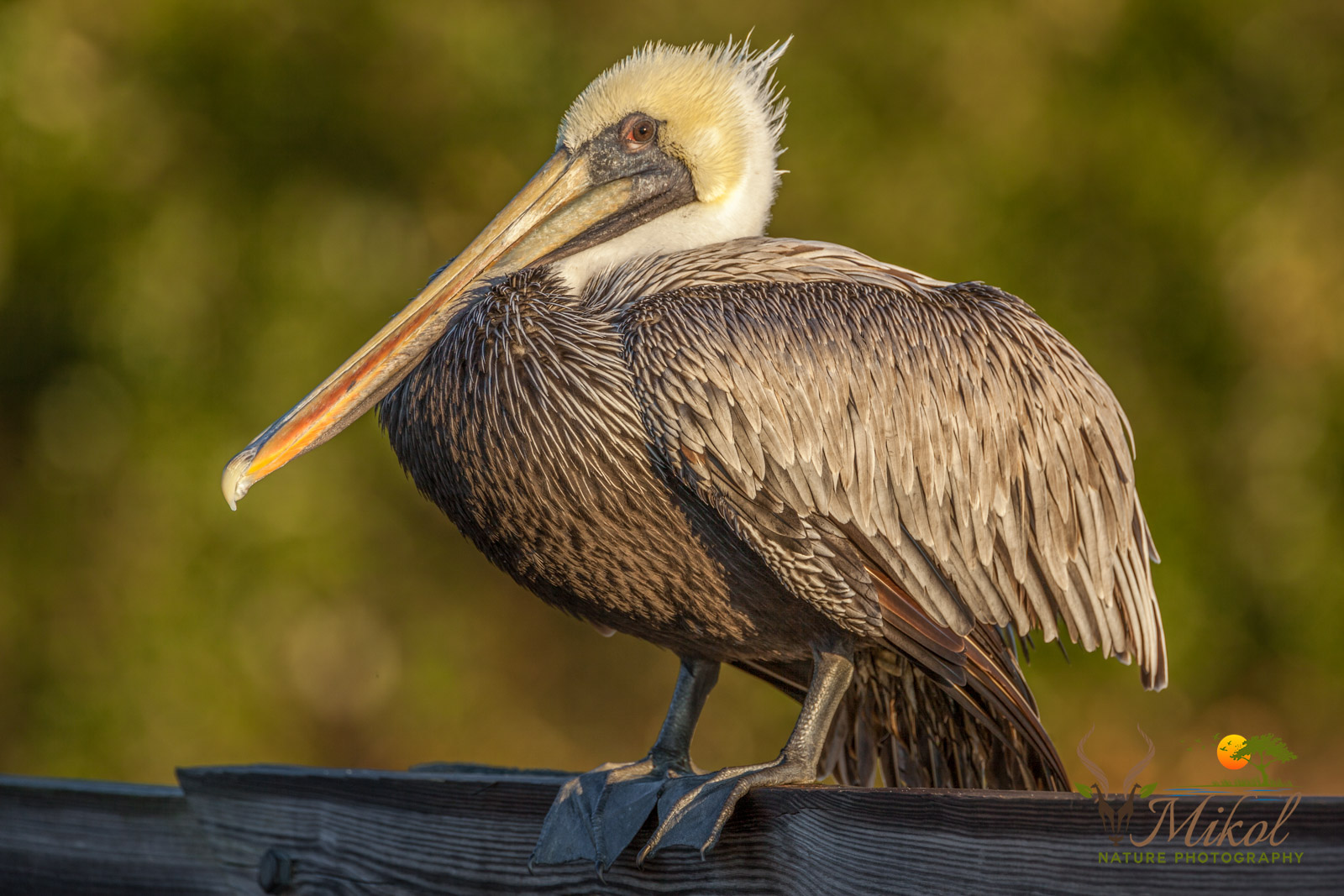
Brown Pelican non-breeding
South Carolina, USA
Brown pelicans are beautiful birds that are entertaining to observe. We have all seen their antics as they hover over a fish from above, then plunge-dive from the sky into the water, catching fish in their pouches. With head tilted back they gulp down their meal.
Pelicans molt throughout the year, with head and neck colors shifting to reflect the breeding cycle. Adult brown pelicans have gray-brown bodies with yellow heads and white necks, which turn a rich dark reddish-brown on the hindneck during breeding season. They possess a large, stretchy, 2 gallon gular pouch for fishing that also changes color based on breeding status. As they mature, their body feathers become iridescent gray, they develop a white throat and neck, and a yellow head. The eyes become a piercing, pale blue
Brown pelicans nearly disappeared from North America between the late 1950s and early 1970s because of pesticides entering the food chain. The pesticide Endrin killed pelicans outright, while DDT contamination led to thin-shelled eggs that broke under the weight of the parents. The species has recovered significantly, and their numbers continue to grow. Breeding colonies are protected as disturbance from human activity can cause panic, with pelicans often abandoning or accidentally destroying their nests.
Photo © copyright by Dr. Edward Mikol.
Photo Prints
Metal Prints
Canvas Prints
Acrylic Prints