
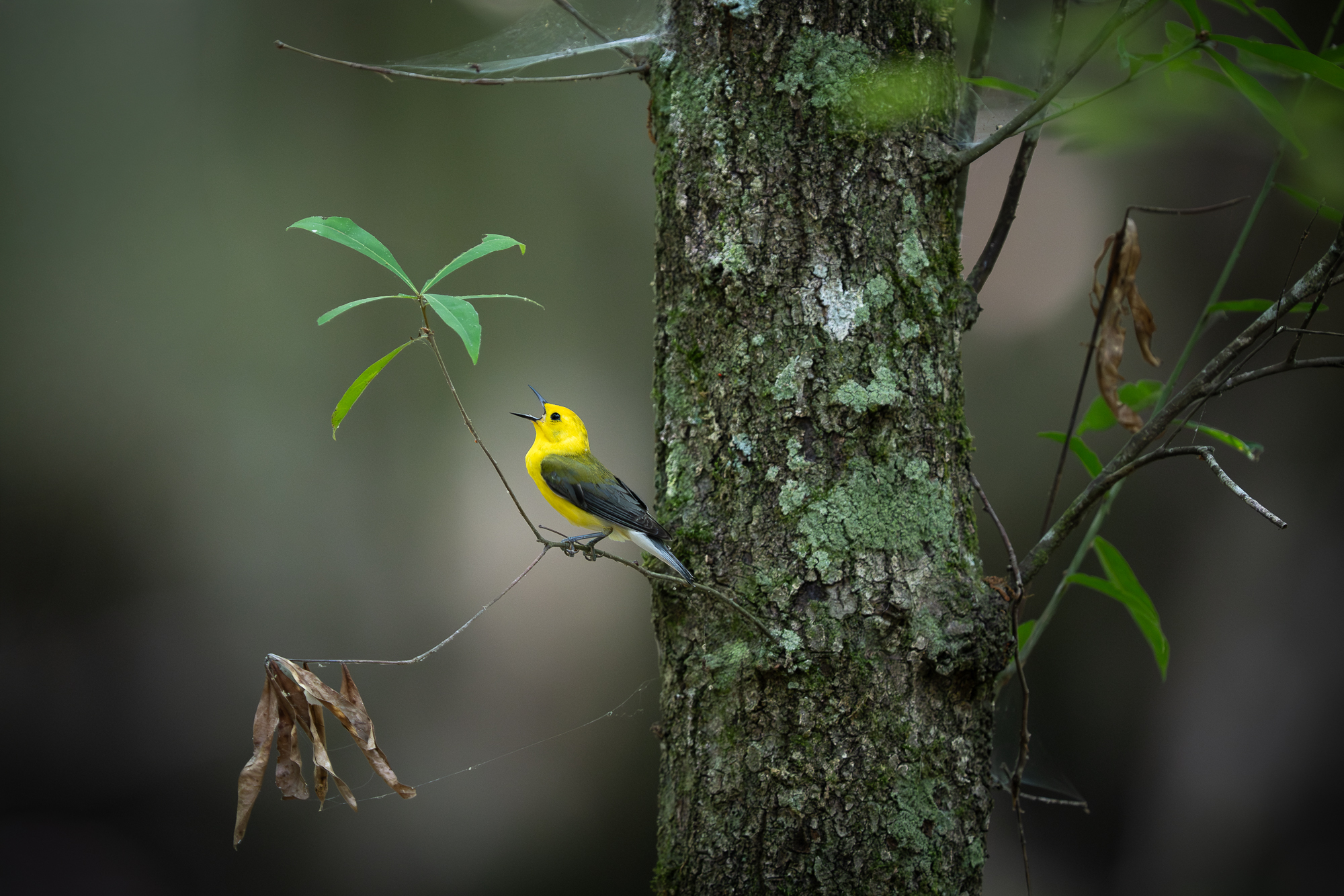
Male Prothonotary Warbler Calling
South Carolina, USA
The prothonotary warbler is a small songbird known for its electric, golden-yellow plumage and its unique nesting habits. Often called the "golden swamp warbler," it stands out like a bright flashlight in the dark, shaded wetlands it calls home. The bird was named by early French-Creole settlers in Louisiana who thought its brilliant plumage resembled the distinct yellow robes historically worn by papal court clerks and protonotaries.
Adult males, seen here, feature a rich, neon-yellow head and breast, with a yellow-olive back and distinct blue-gray wings and tail. Females and immatures follow the same pattern but are slightly duller and paler. Males produce a loud, ringing, and piercing series of 4 to 14 "tsweet" or "swank" notes delivered on a single pitch.
During the spring and summer breeding seasons, they are strictly tied to flooded bottomland forests, wooded swamps, and slow-moving rivers across the eastern United States where they breed. Unlike almost all other eastern warblers which build open-cup nests, the prothonotary warbler is a cavity nester, laying its eggs in natural tree hollows, old woodpecker holes, or man-made nest boxes.
Photo © copyright by Dr. Edward Mikol.
Photo Prints

Metal Prints
Canvas Prints
Acrylic Prints