
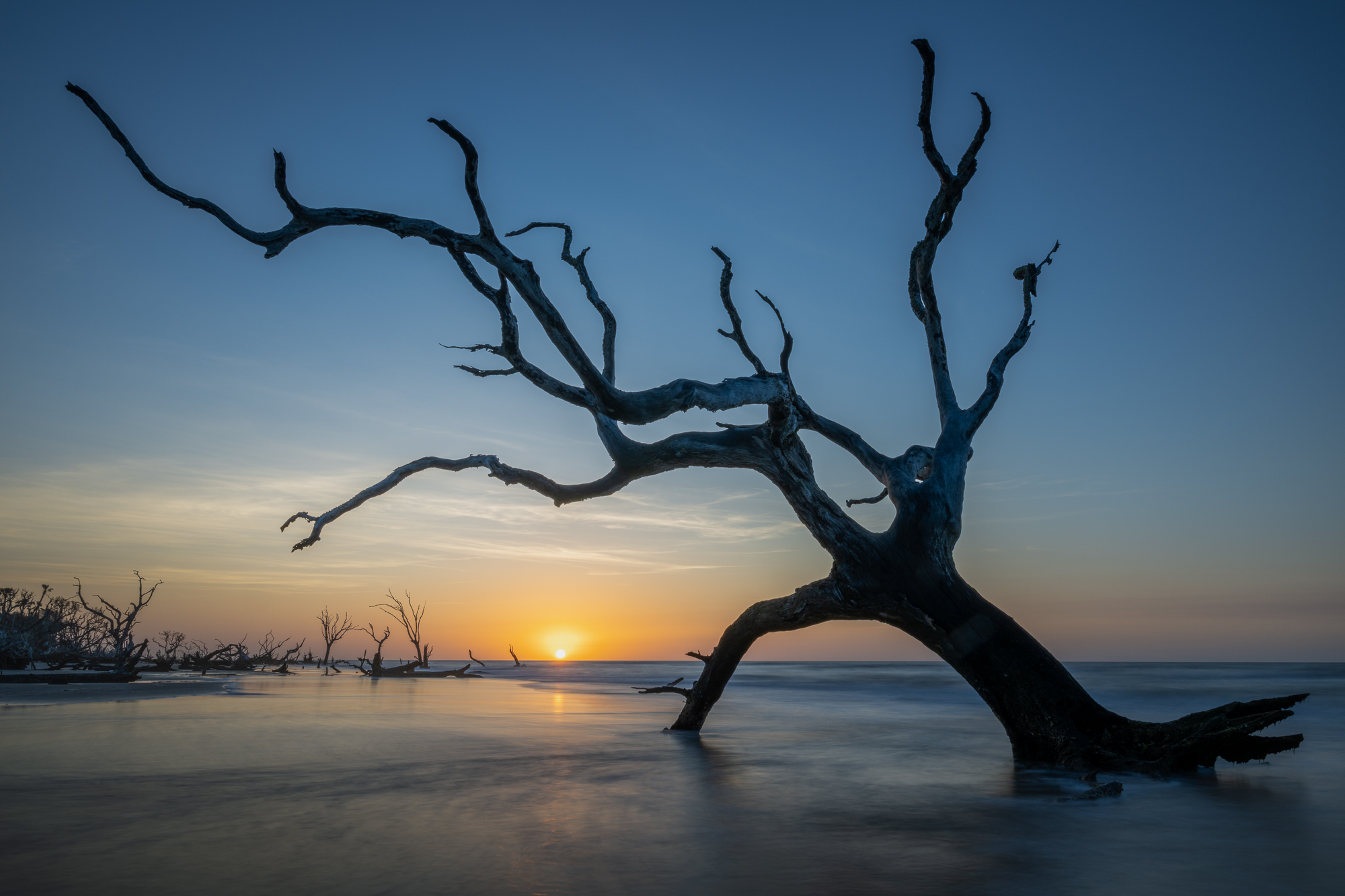
Sunrise at the Boneyard Beach
SC, USA
Boneyard beaches form in areas with soft sediment, high wave energy, and a history of changing shoreline dynamics. Coastal erosion gradually eats away at a shoreline, leaving behind the bleached and weathered skeletons of the trees of the maritime forest that once stood there.
The primary cause is the constant erosion of the shoreline by waves and currents, exacerbated by storms, which gradually removes sand and exposes the roots of trees that were once further inland. As the shoreline recedes, the trees near the edge die, as they are often unable to adapt, leaving behind their decaying trunks. The exposed dead wood is further weathered by the sun, salt spray, wind, and sand, which bleaches and smooths the wood, giving it a skeletal appearance.
Yet even after their death the trees are important to the maritime environment. Their skeletal remains help hold together the beachfront, with in turn protects the marsh that lies just inland.
Photo © copyright by Dr. Edward Mikol.
Photo Prints
Metal Prints
Canvas Prints
Acrylic Prints