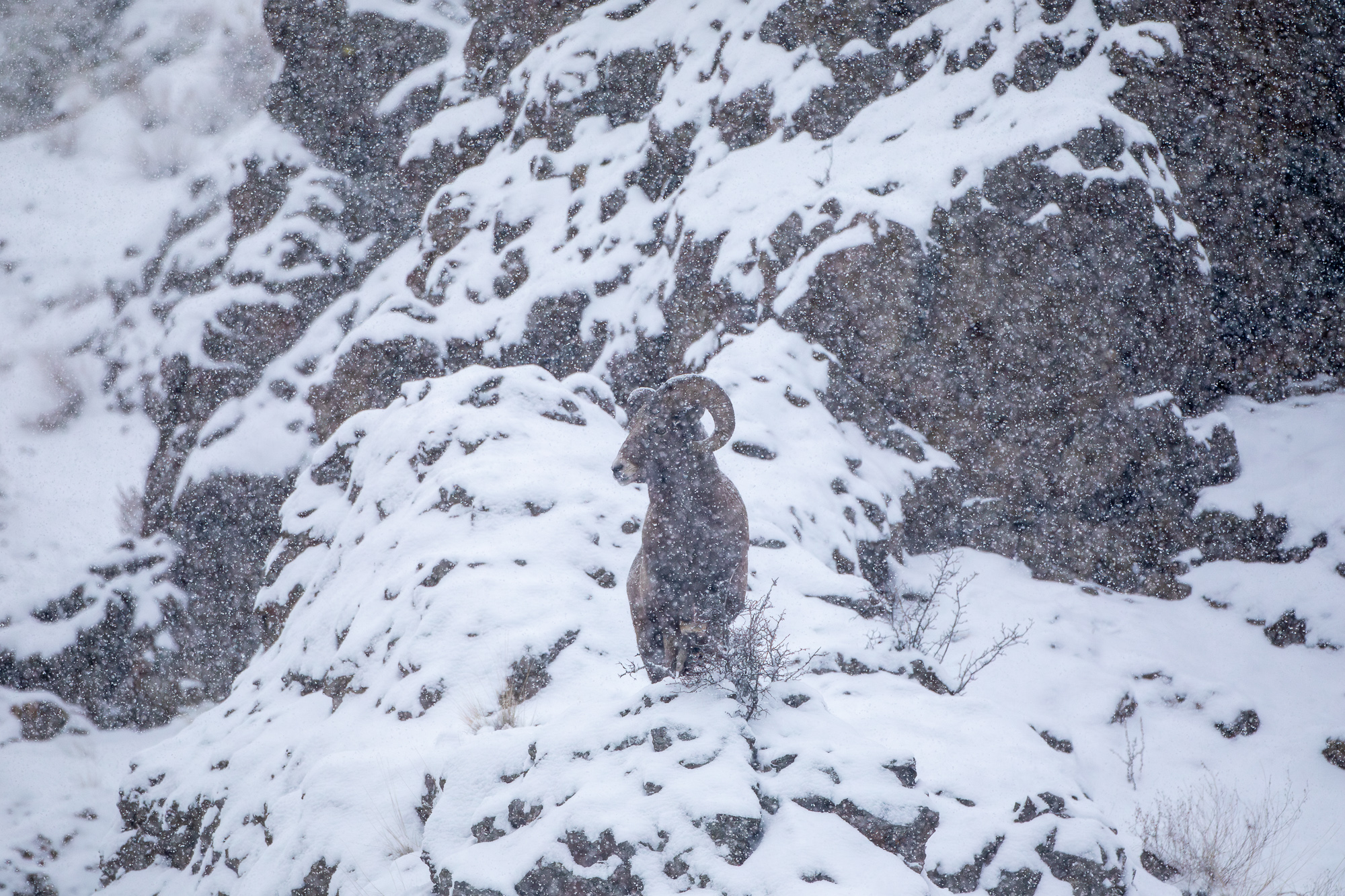
Rocky Mountains' Bighorn Sheep
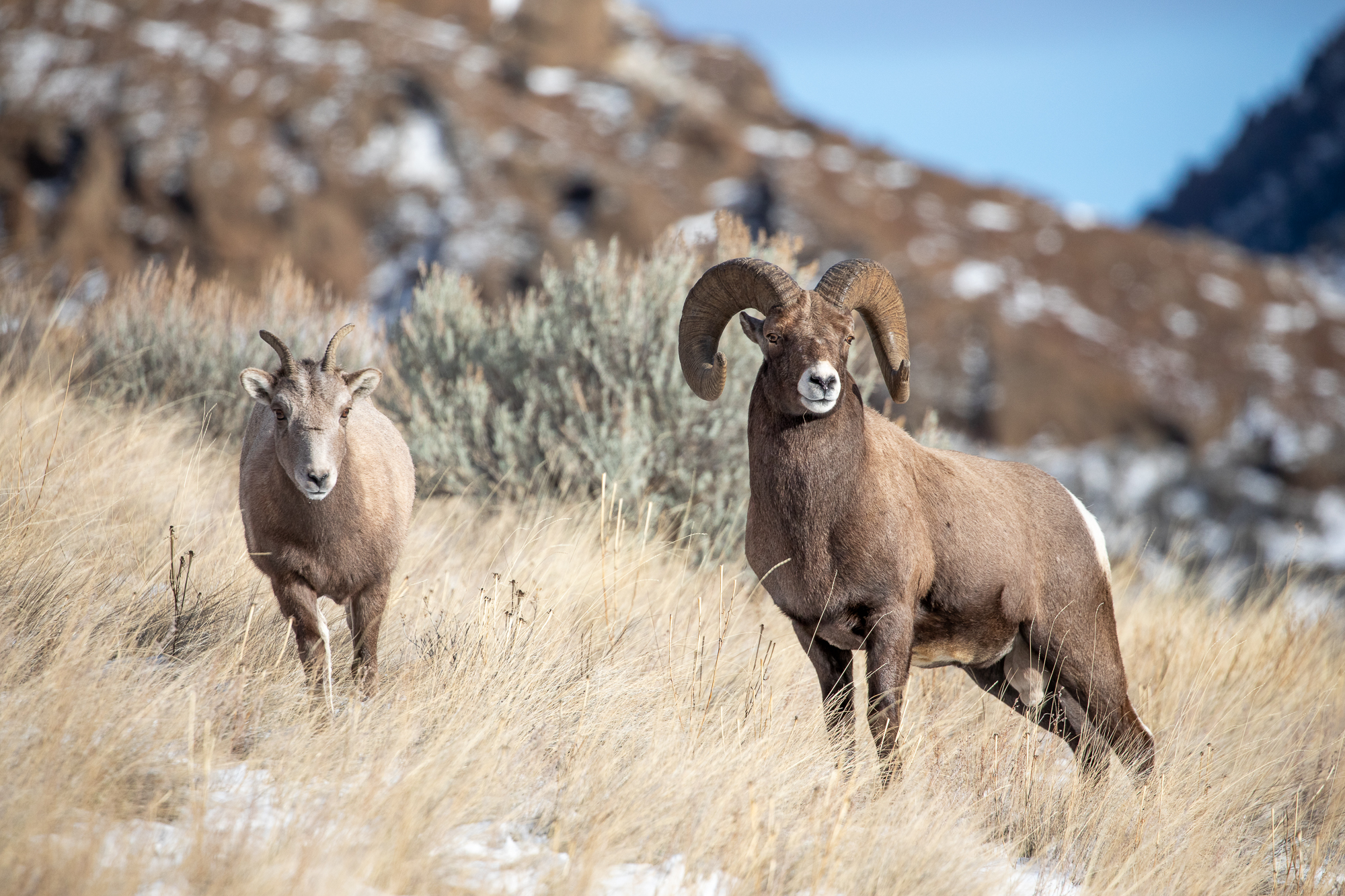
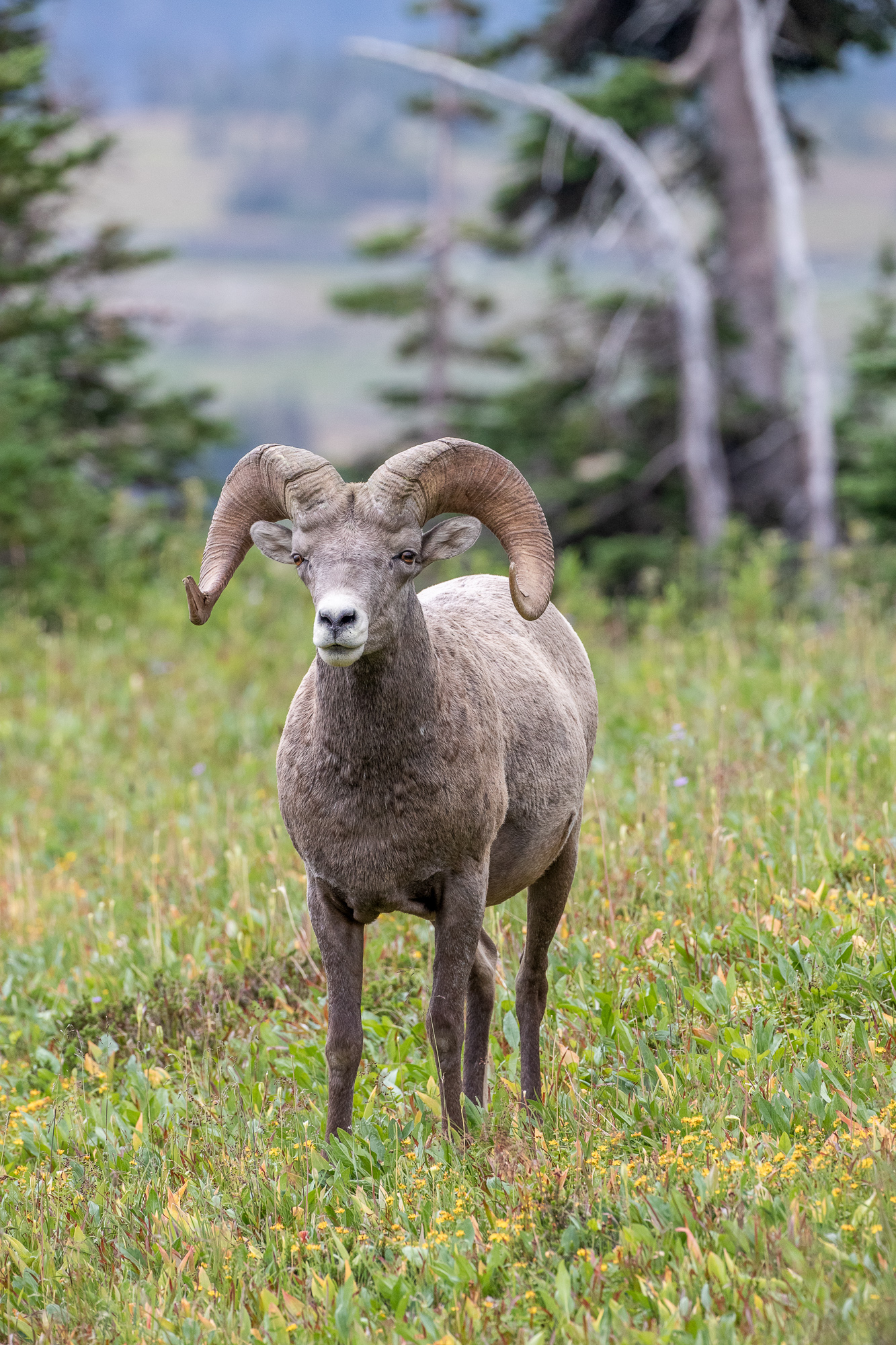
There are three species of bighorn sheep in North America, with the Rocky Mountain subspecies (O. c. canadensis) being the subject of this post. These sheep are social animals that live in herds. Ewes and lambs typically live together in groups of 5 to 15; Rams live separately in groups of 2 to 5. This species is named for the impressive horns the males grow throughout their lifetime, weighing up to 30 pounds per pair. The number of horn segments counted in the fall is one more than the ram's age. Ewes grow much smaller horns.
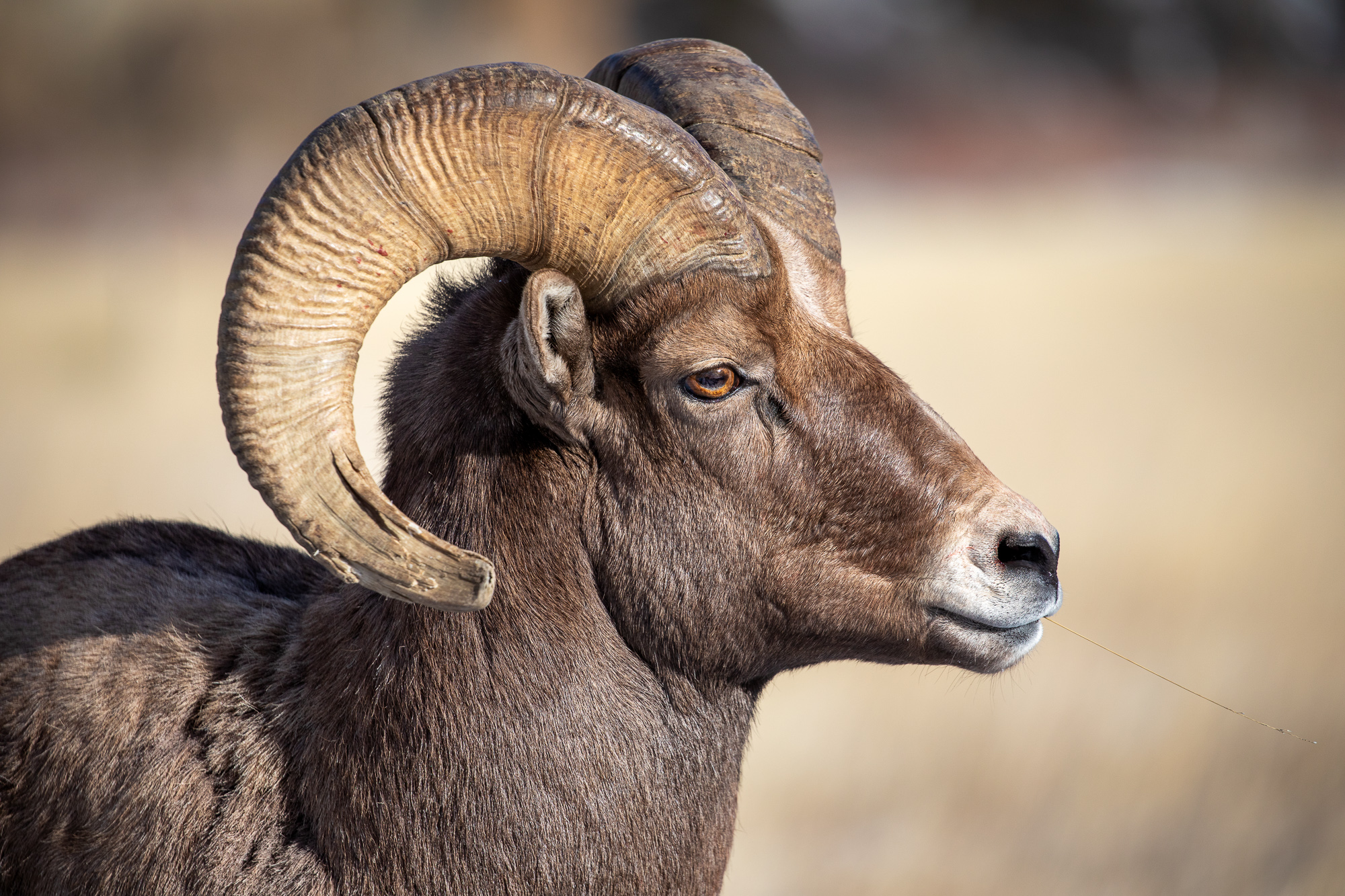
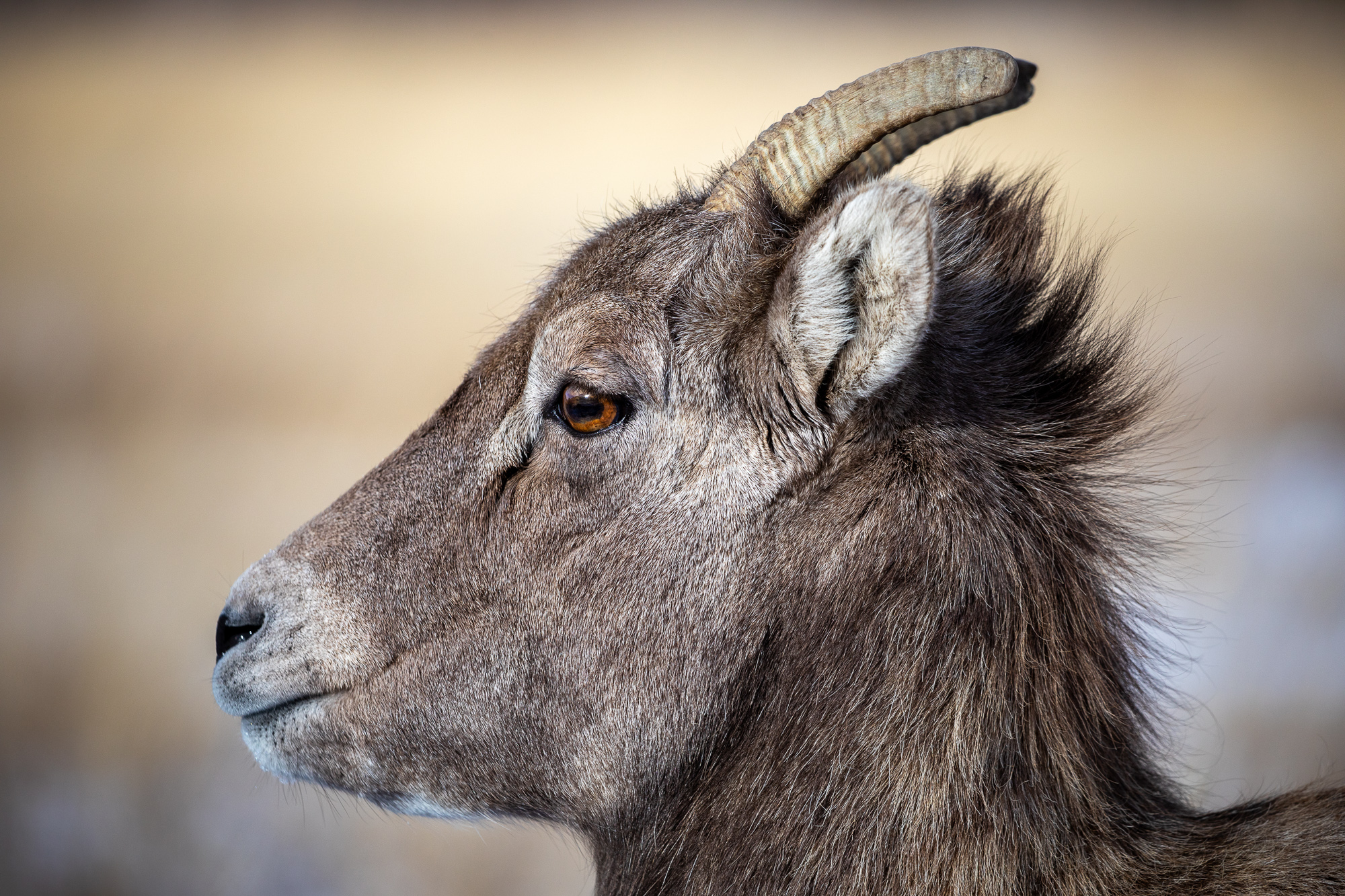
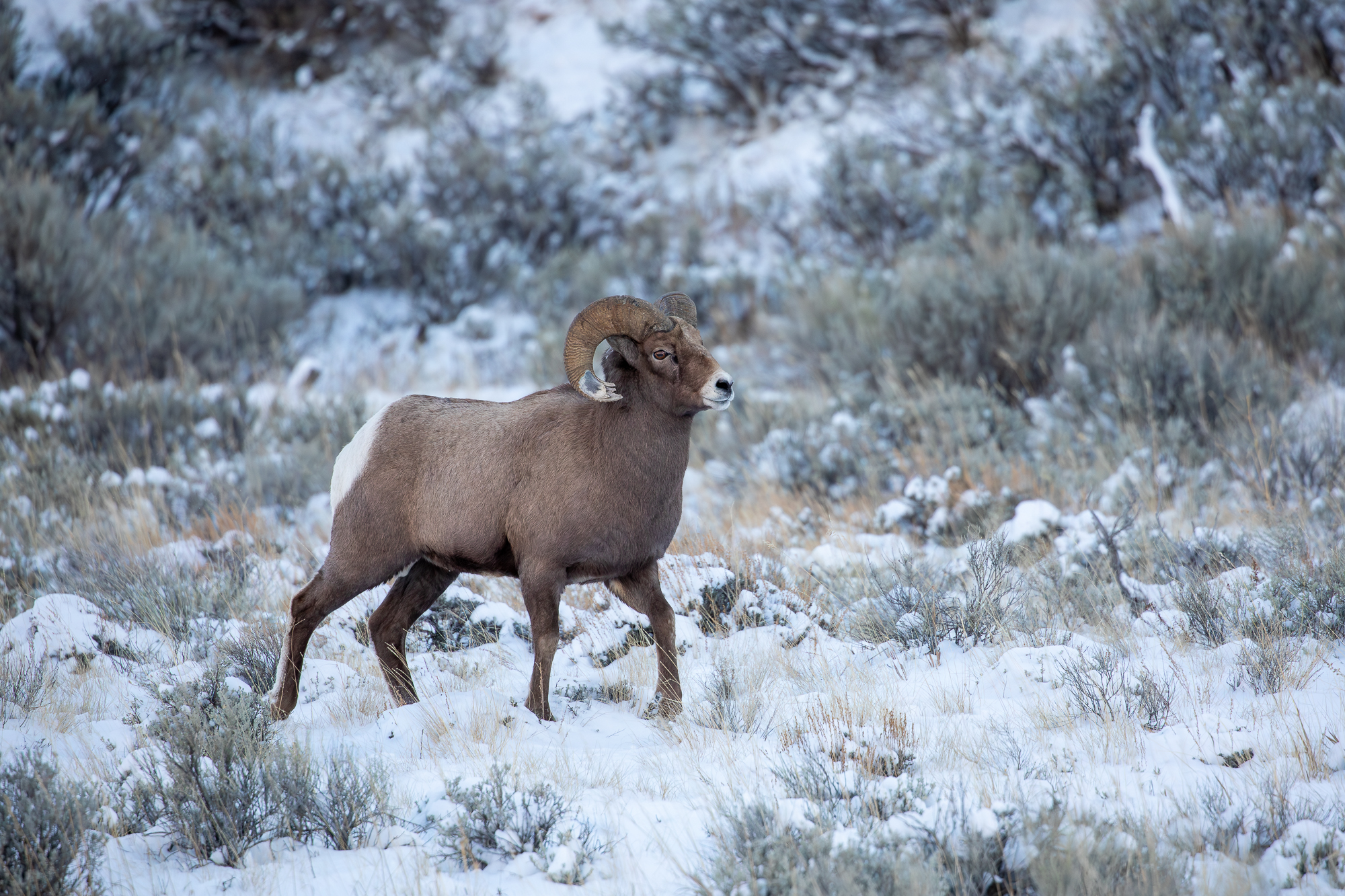
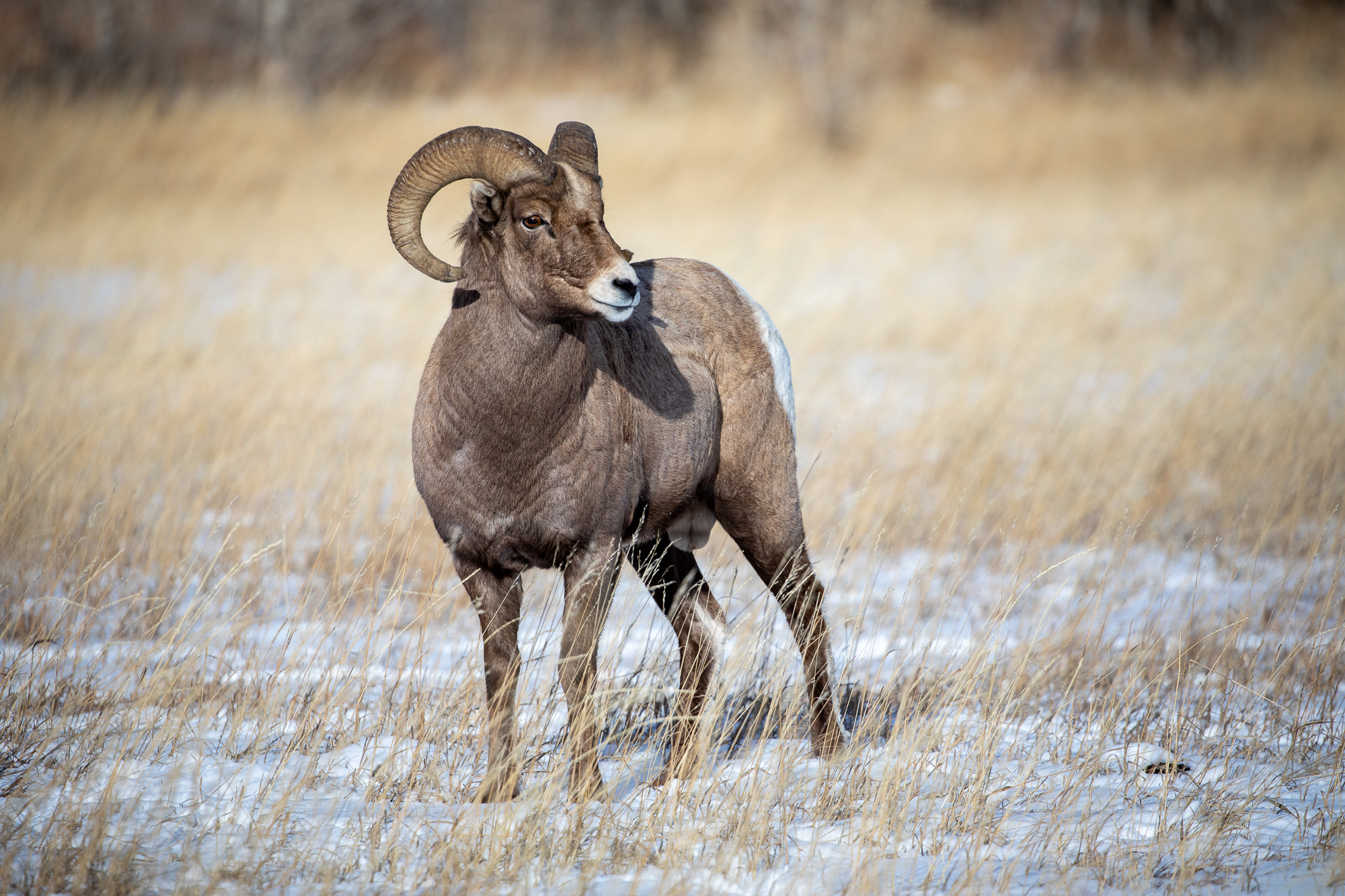
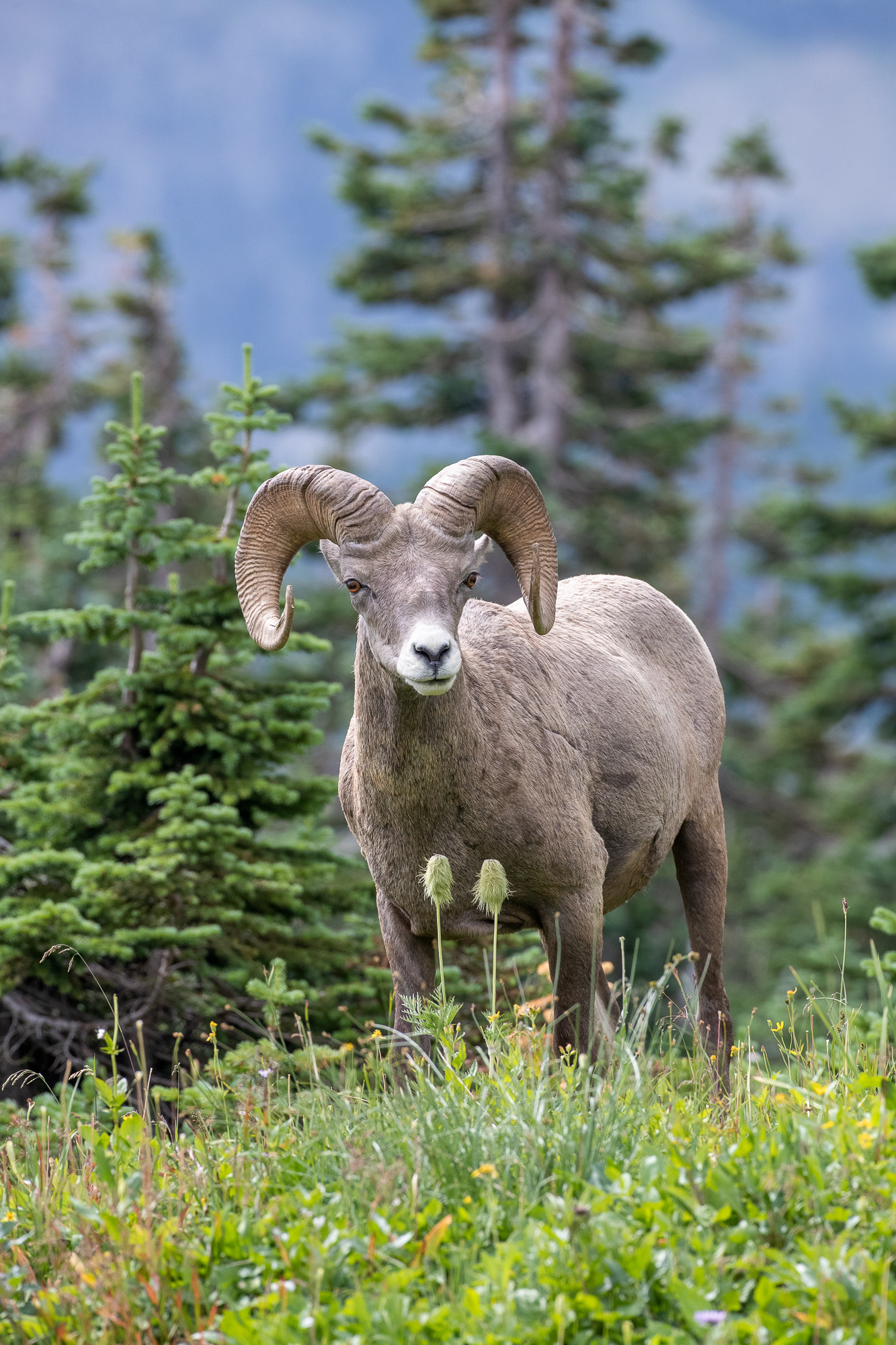
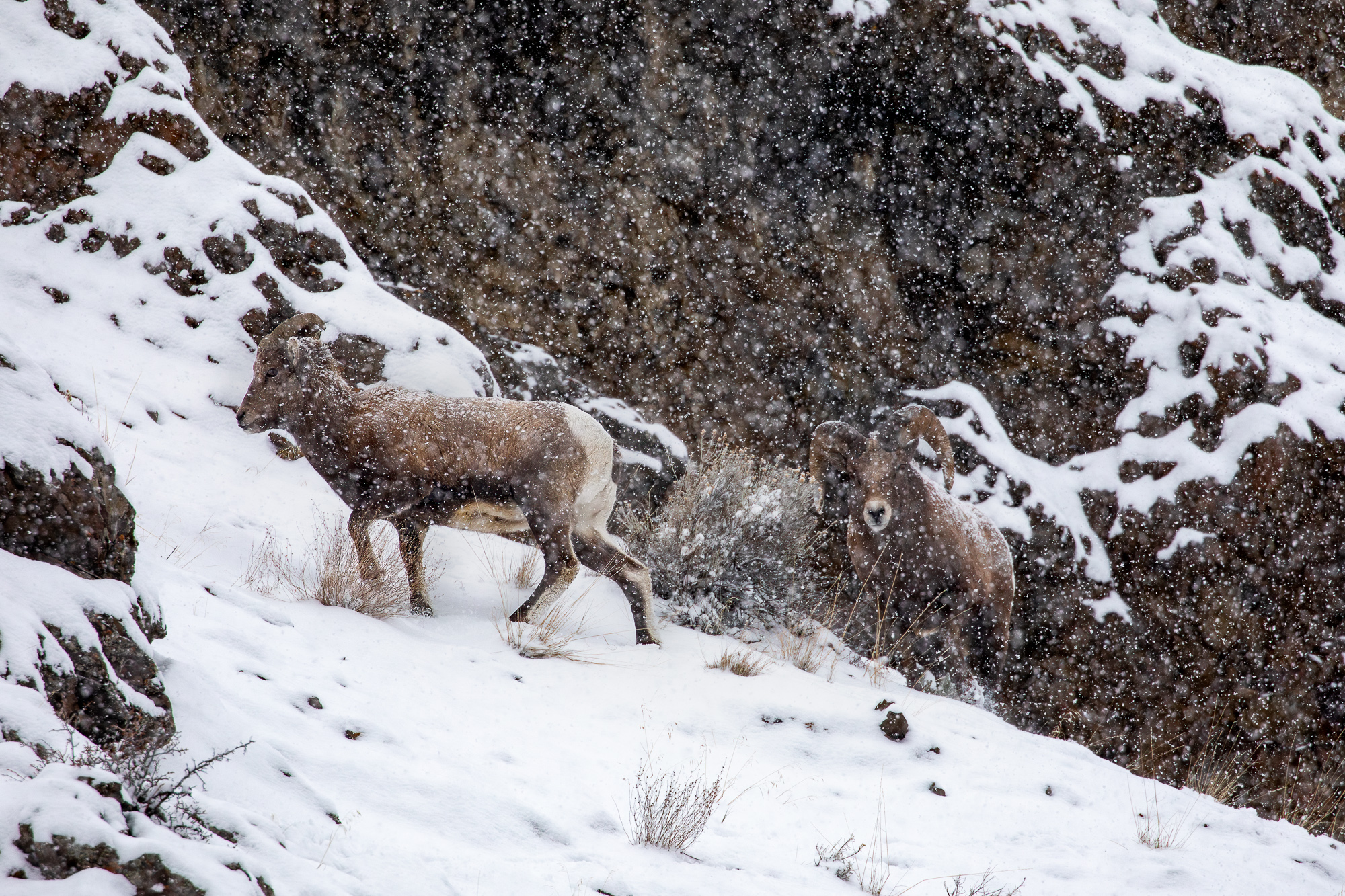
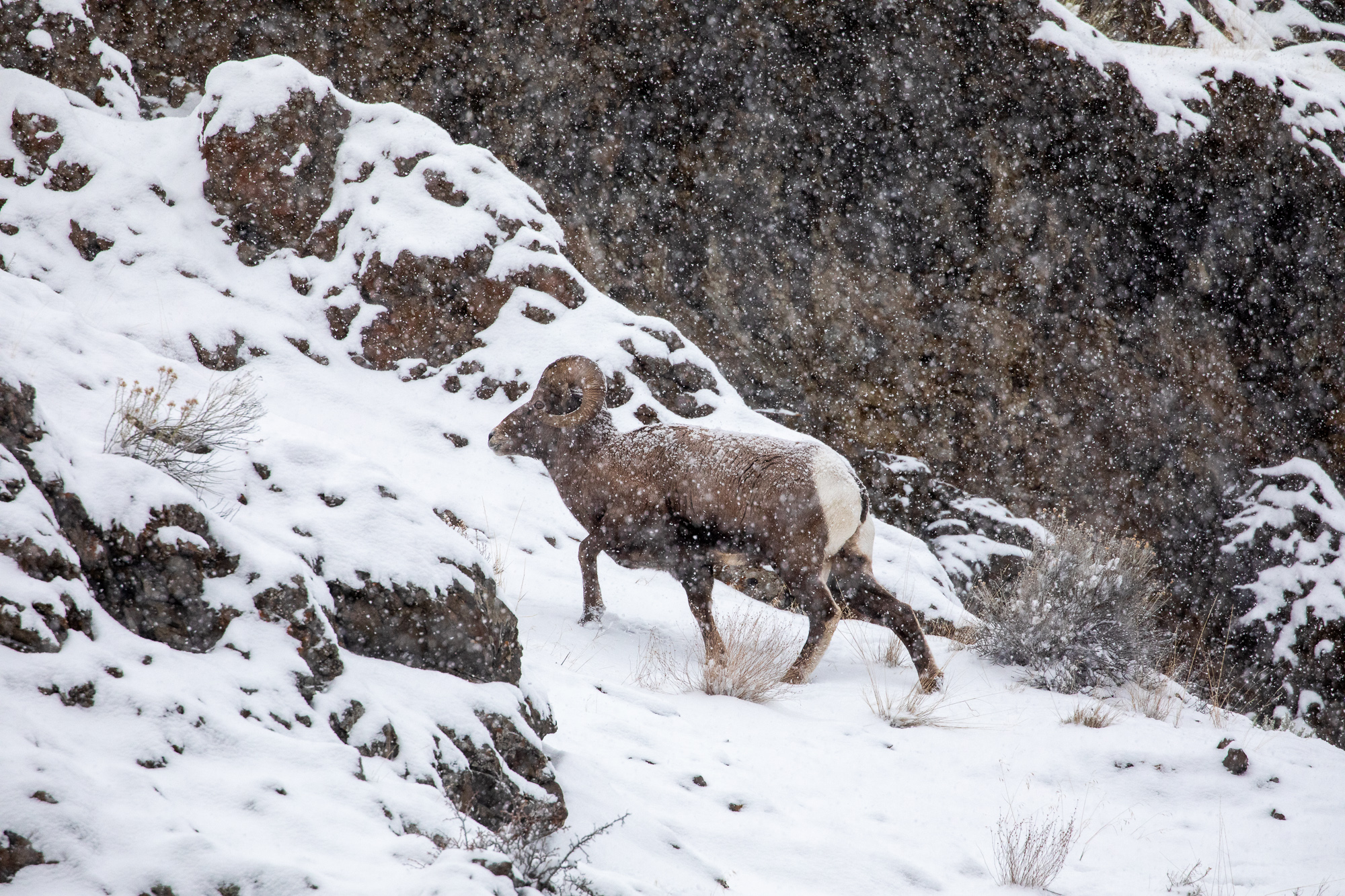
Bighorn sheep are a hardy breed that tolerate a range of weather conditions. They live at altitude in the warmer months, making their way to the lower elevations in winter as the cold and snow sets in. Summers are spent in alpine meadows browsing on grasses, clover, wildflowers and sedges. They transition to eating woody plants like willow and sage in colder months. Indeed, bighorn sheep are well-adapted to survive the wide range of weather encountered in these mountains.

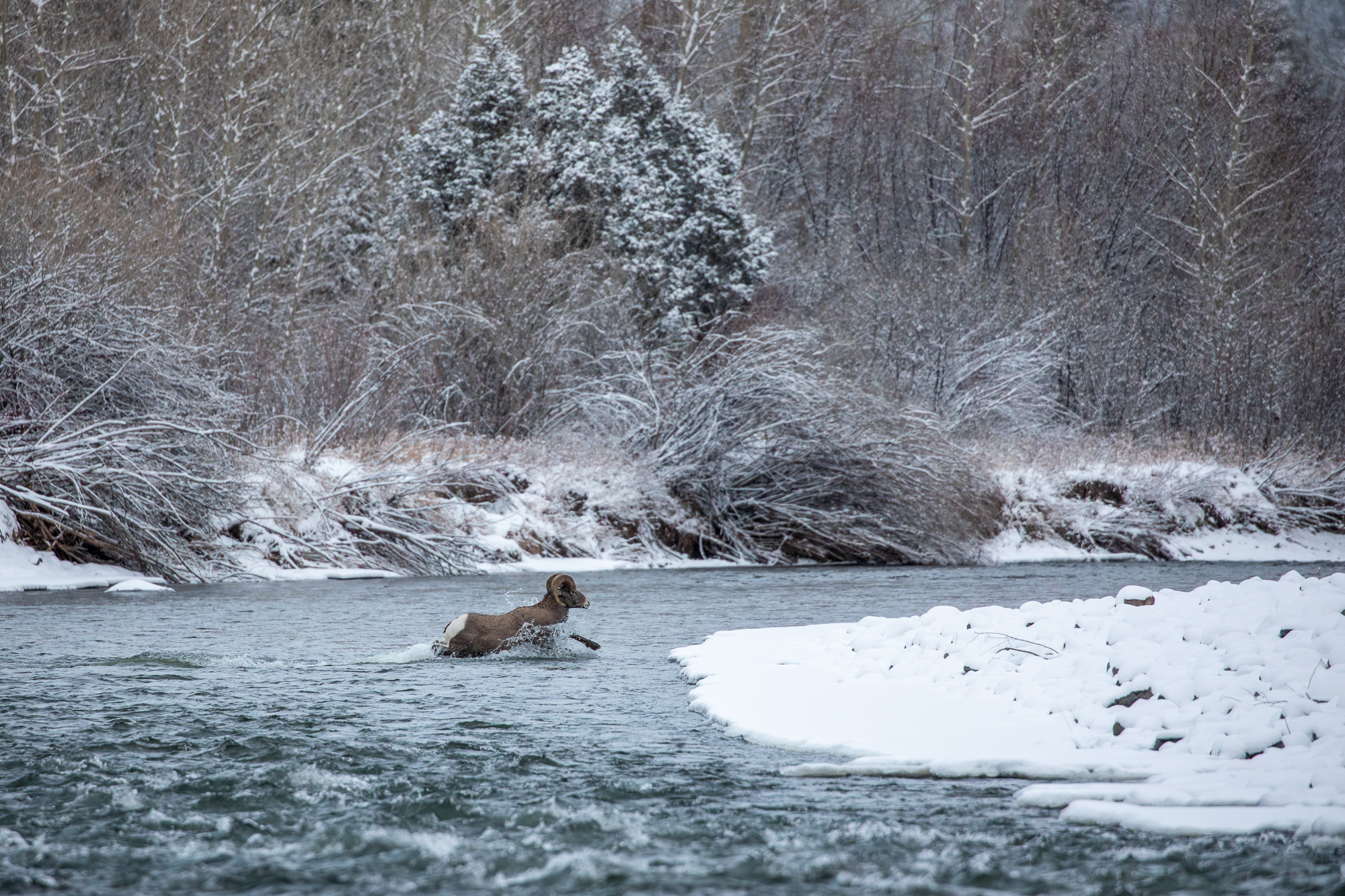

Their two-toed split hooves are modified, helping them climb and navigate steep, rocky slopes. The outer hooves are hardened and shaped like toenails, snagging onto any protrusions, while the inner pads are soft and conform to the surface. Although not as adept as mountain goats, they can go where other animals are unable, and this affords them some protection from predators.
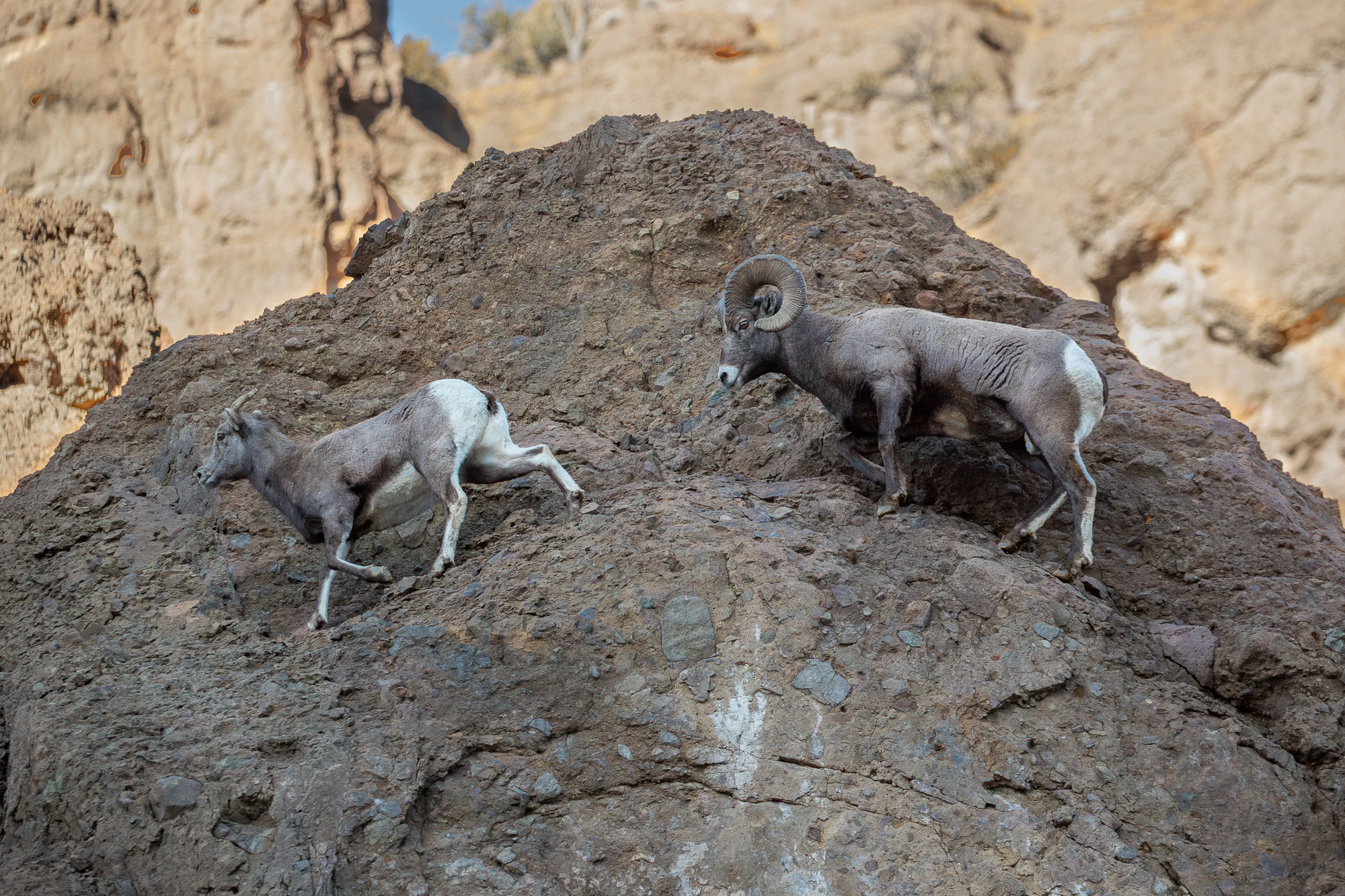
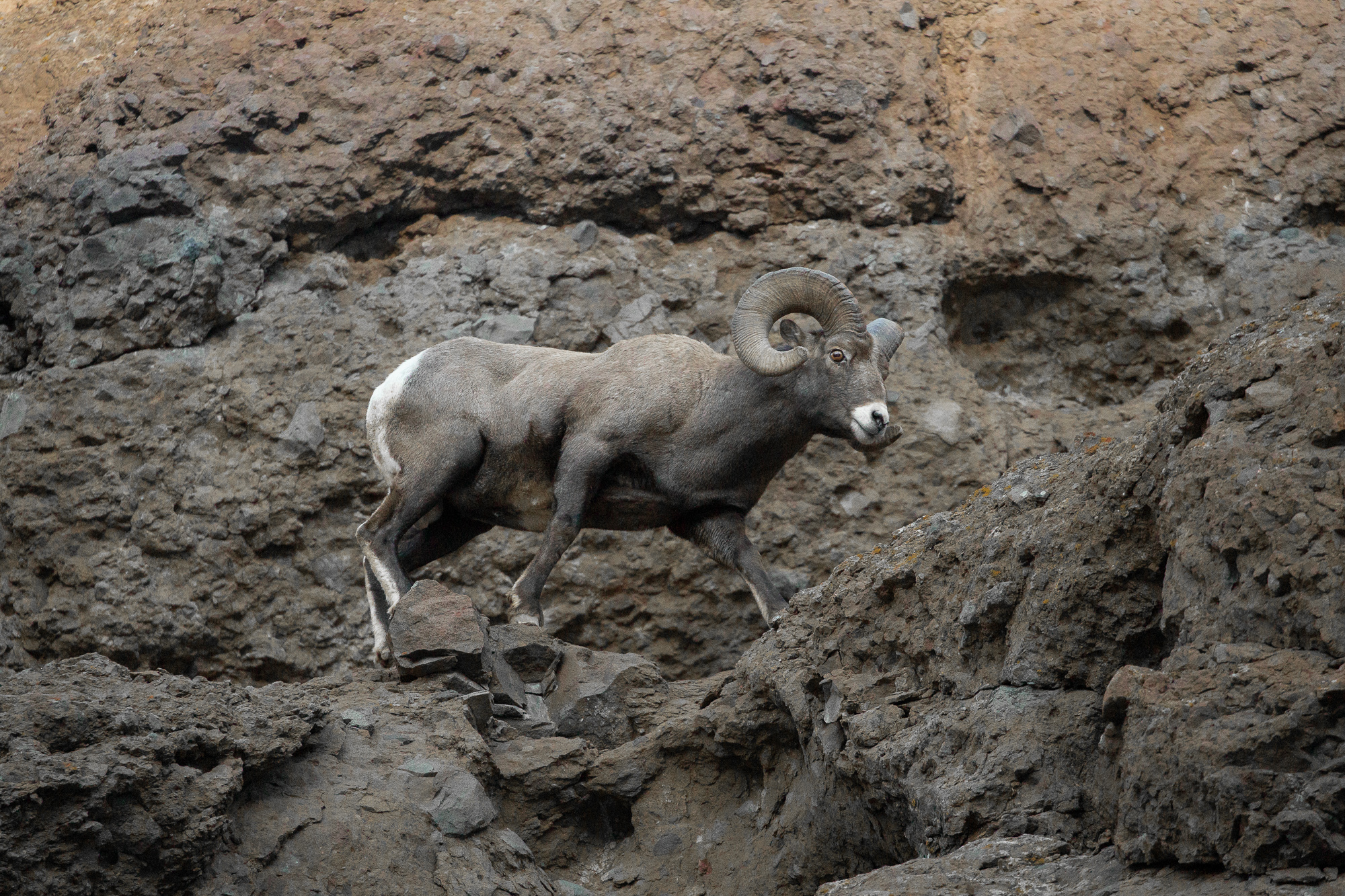
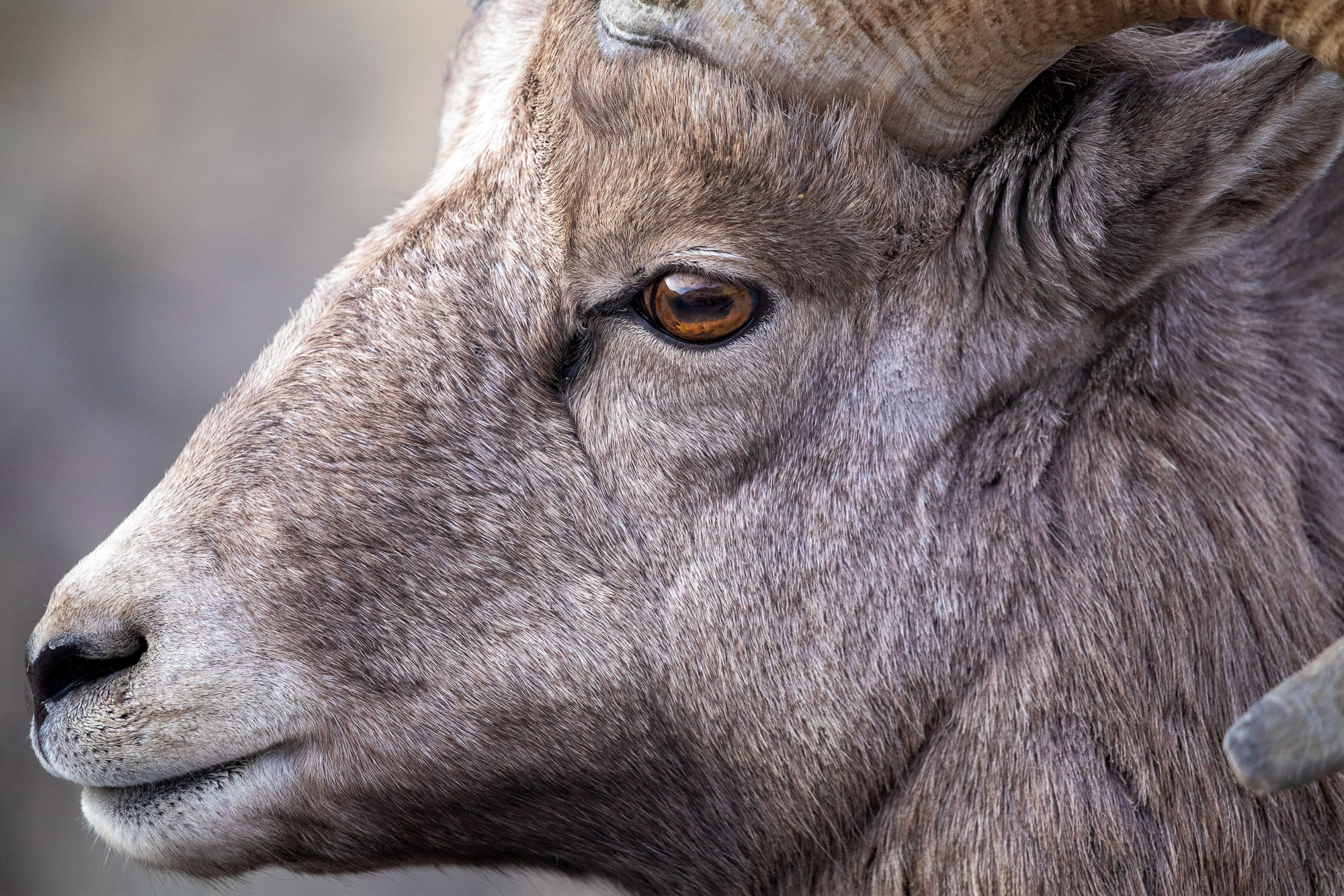
A bighorn sheep has acute eyesight, its primary defense against predators. Their eyes are space wide apart to allow for a wider field of view, estimated to be 320 degrees. In most animals this would decrease their depth perception. But bighorn sheep’s pupils are rectangular, allowing for better depth perception, despite their widely spaced eyes. This acute eyesight allows bighorns to navigate the sheer cliffs and rocky ridges they inhabit. It takes precision to navigate in their world, and mistakes could result in a fatal fall.


Bighorns have thick, insulating fur that helps them stay warm in cold temperatures. In the winter, their coats may be lighter in color and have a double layer. They store fat in the summer when food is abundant, helping them survive the cold and harsh conditions. They can essentially hibernate standing up, living off fat during the winter and conserving energy.

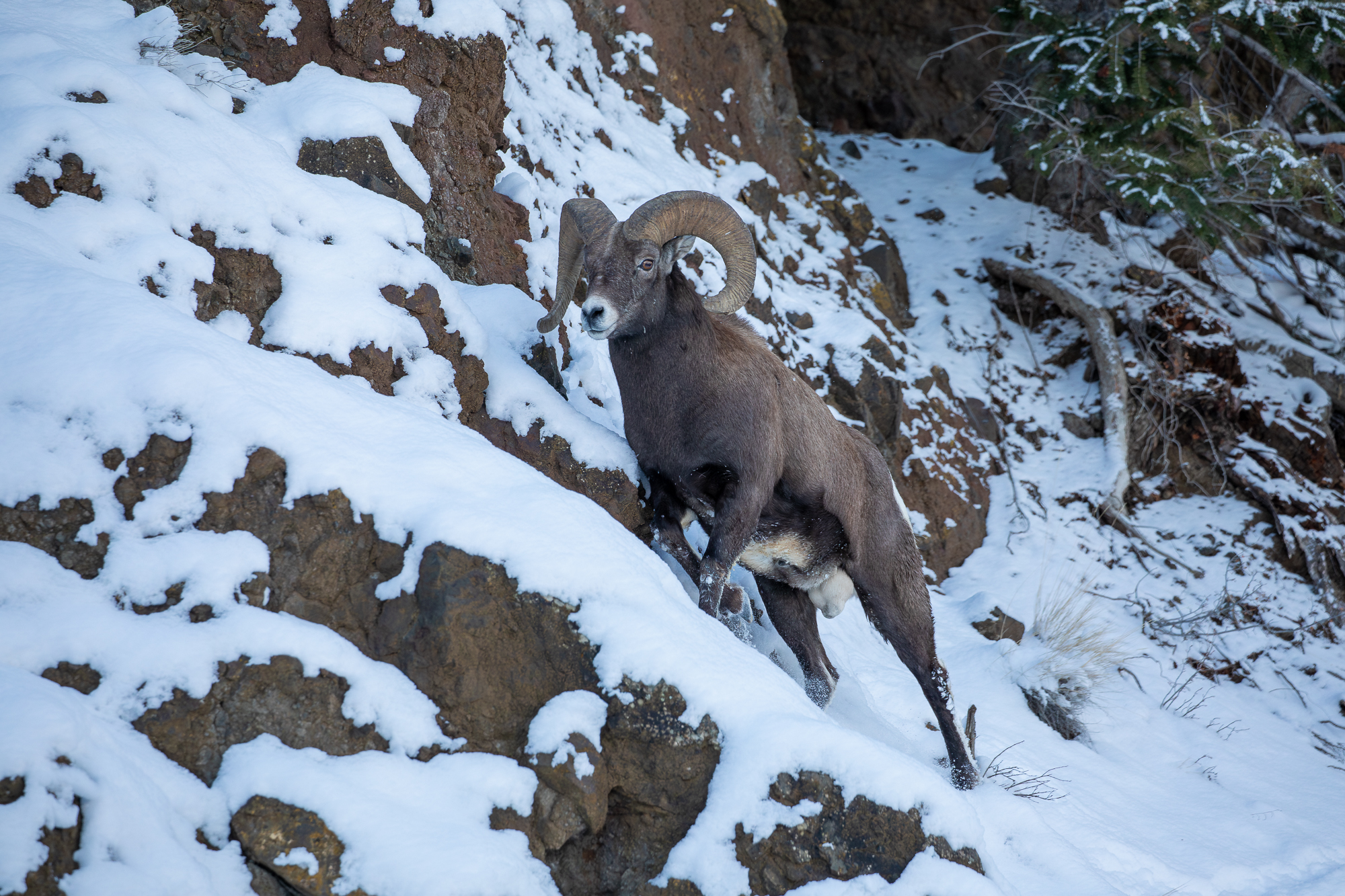
The rut is marked by a spike in the ram's testosterone, triggering testicular swelling and behavioral changes. It’s all about dominance, as the one that is victorious gets to breed with the ewes.
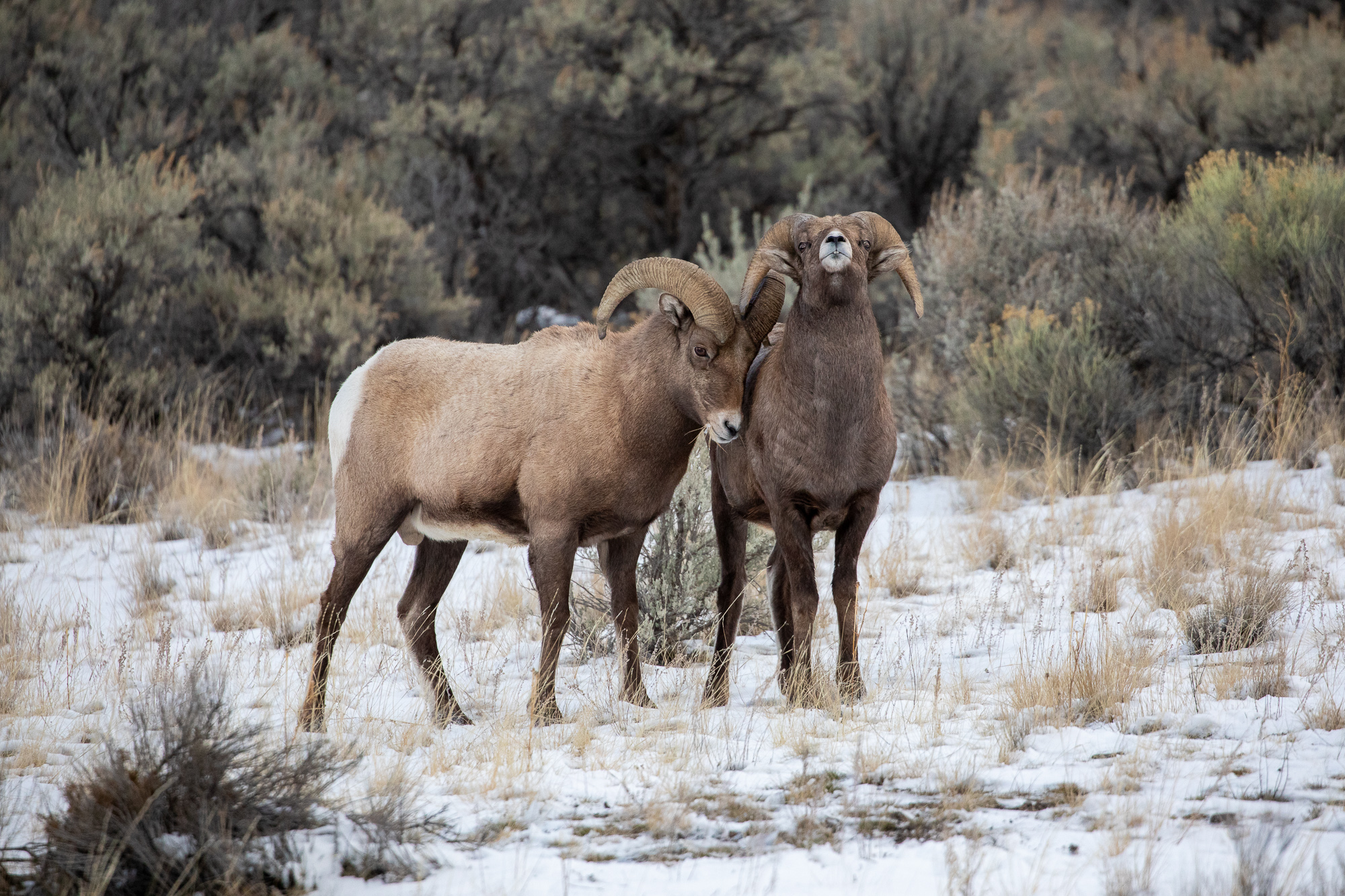
These rams are constantly on the move, instigating others and picking fights. They will poke and prod other rams, often kicking them in the chest, gut or testicles. If one does not back down, the fight for dominance culminates in the rams rising up and charging at the adversary, and colliding with an impressive impact and a loud sound that can be heard from afar.


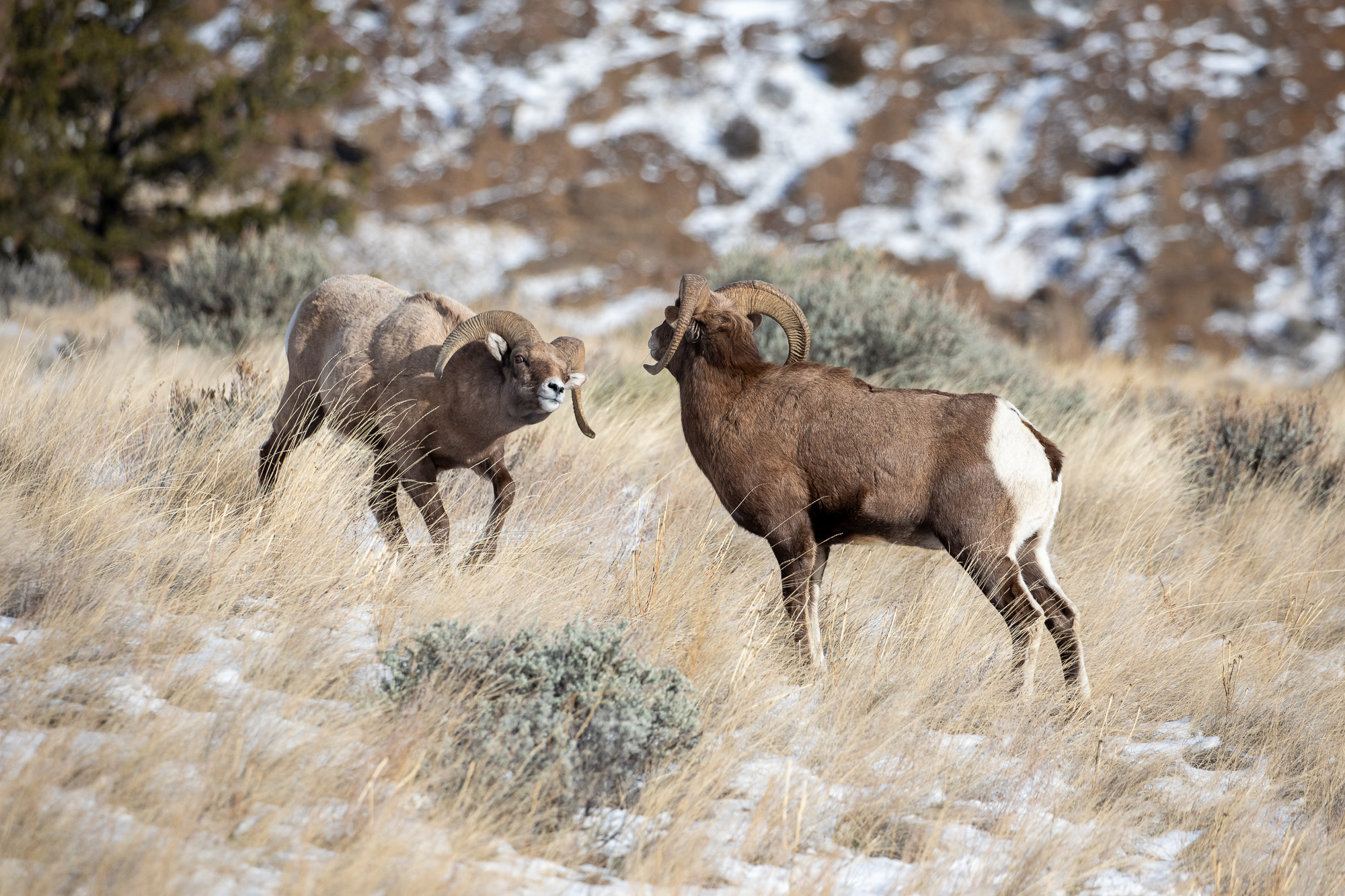
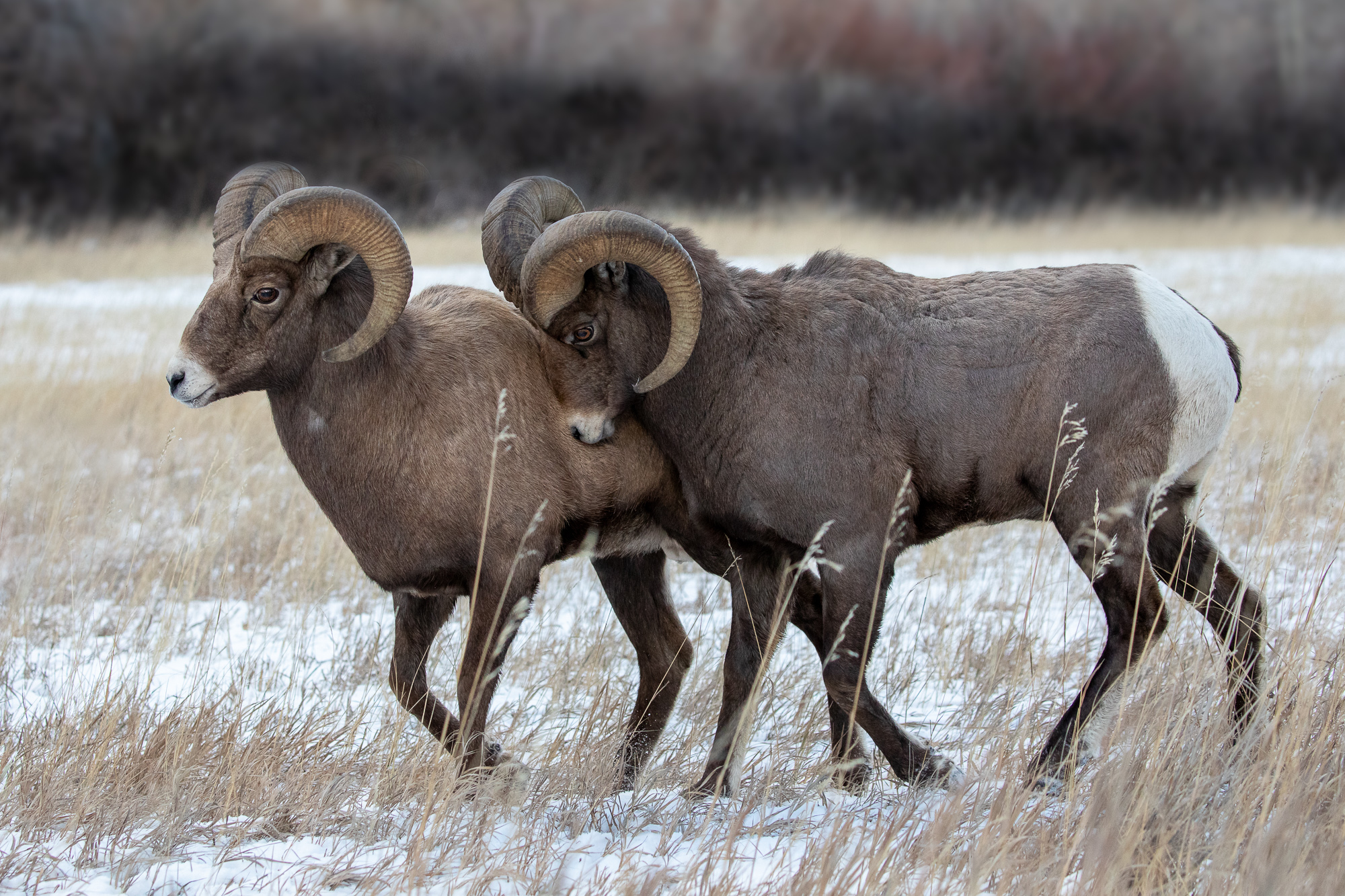
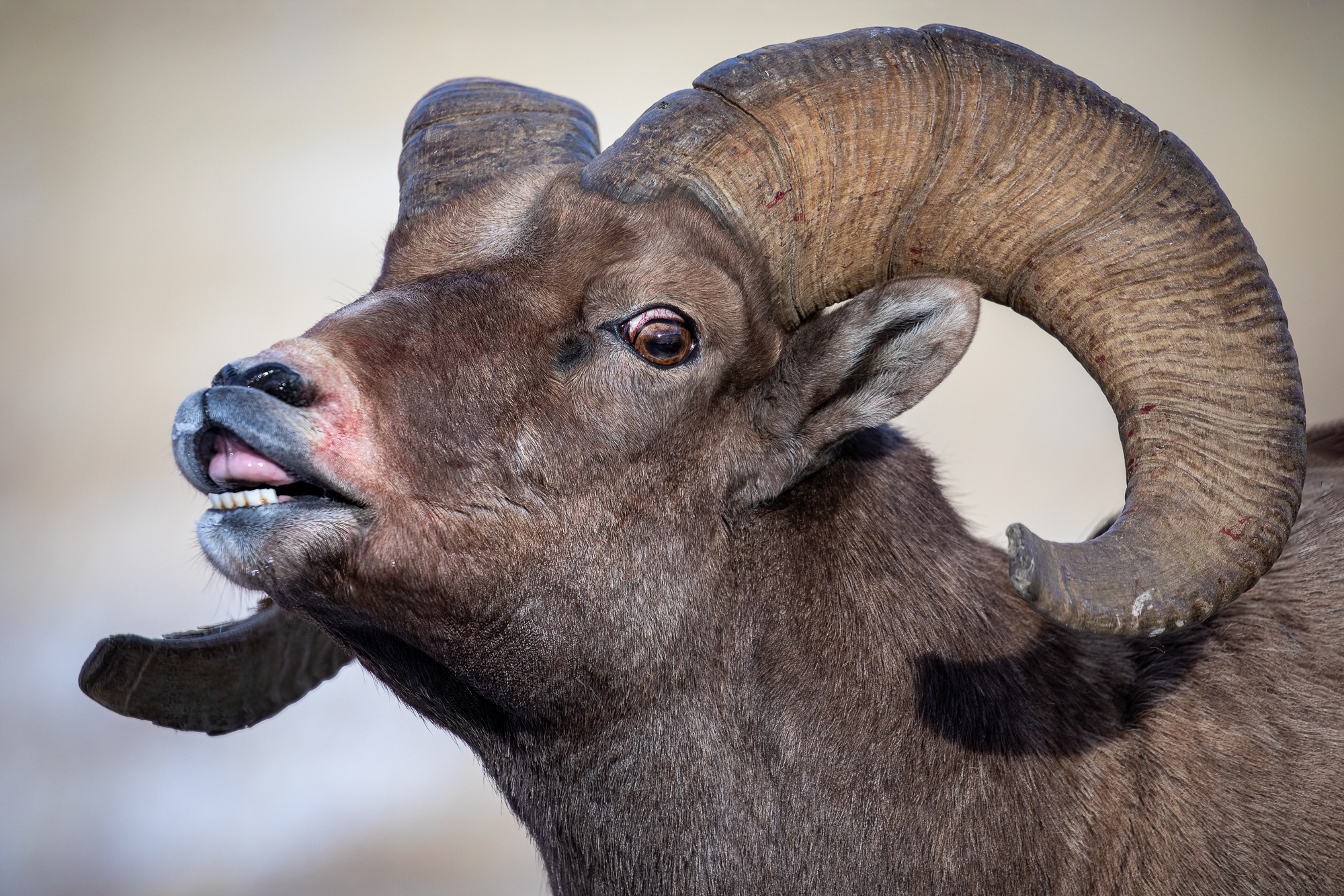
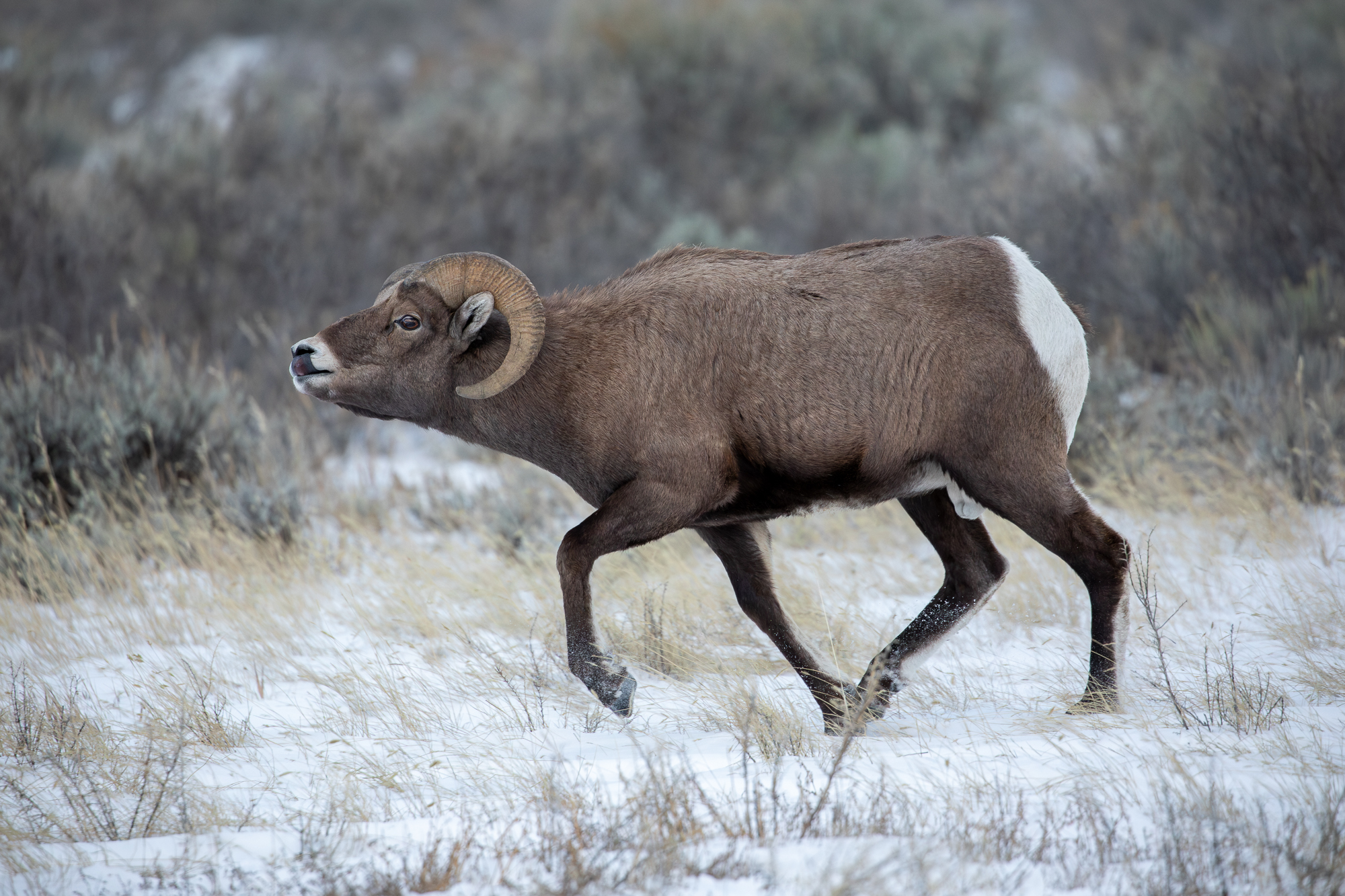
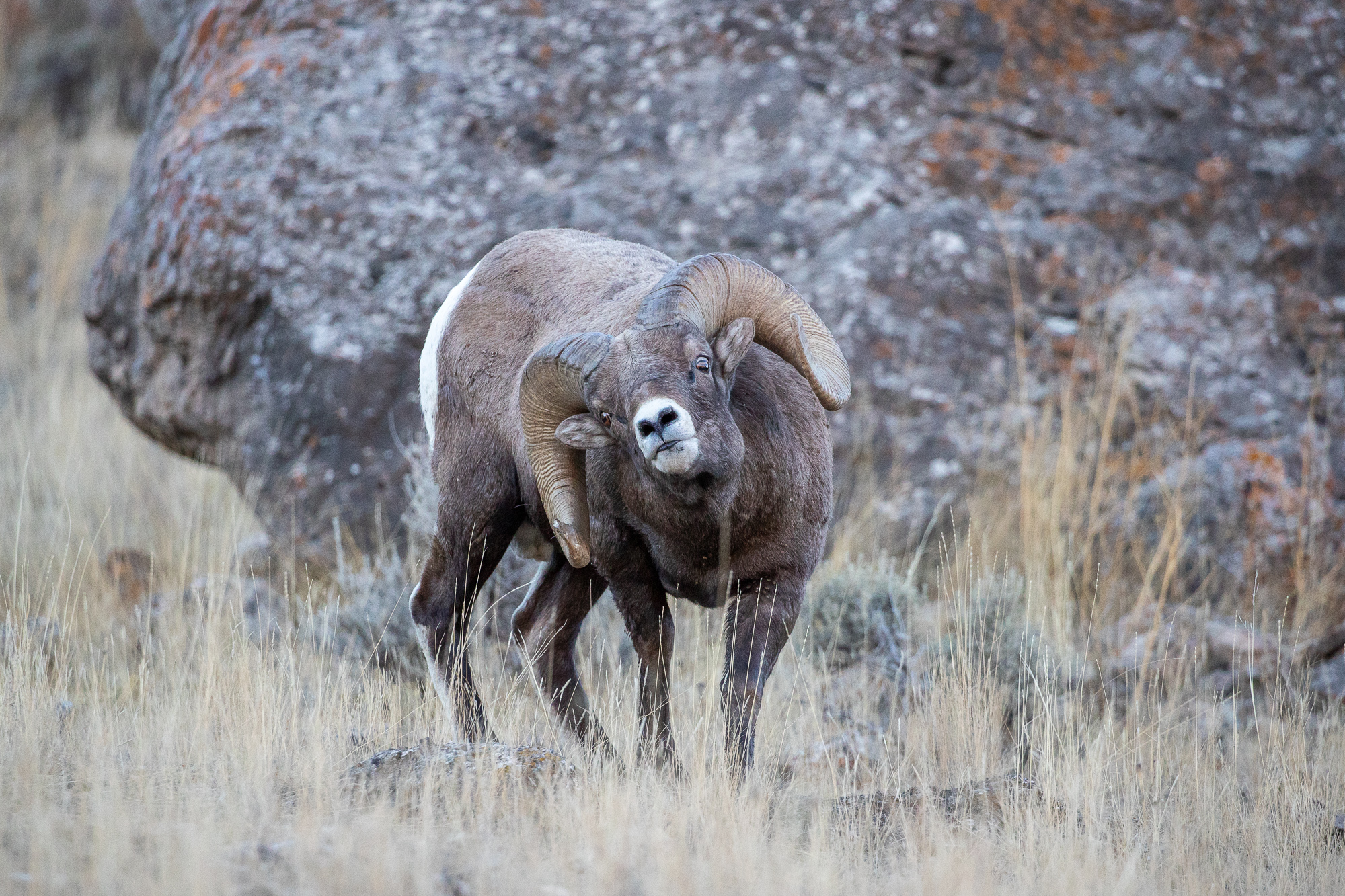
During the rut, a bighorn ram will contort its head and neck into twisted positions, exhibiting what’s called the flehmen response. It is a behavior in which an animal curls back its upper lip exposing its front teeth, inhaling with the nostrils and often holding this position for a few seconds. He is testing the air for pheromones produced by the female. He directs these to an olfactory organ in the roof of his mouth. In this way he can sense whether the female is ready to mate.
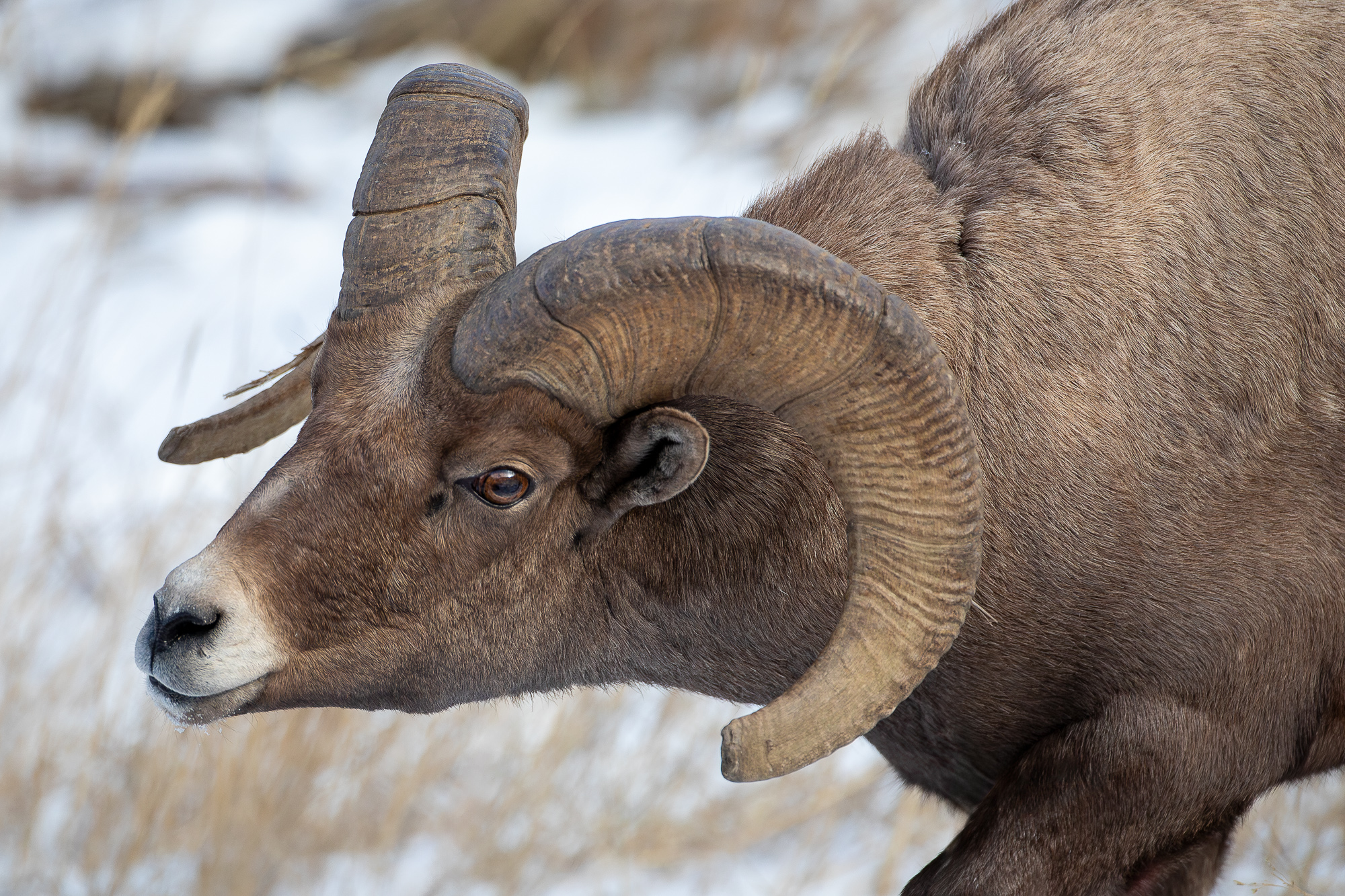
The ram will then follow her closely, courting her and waiting for just the right time, while fending off other contending males. Evidence of these battles is seen in the ram below, showing worn horns with broken tips, and blood on its horns and snout.


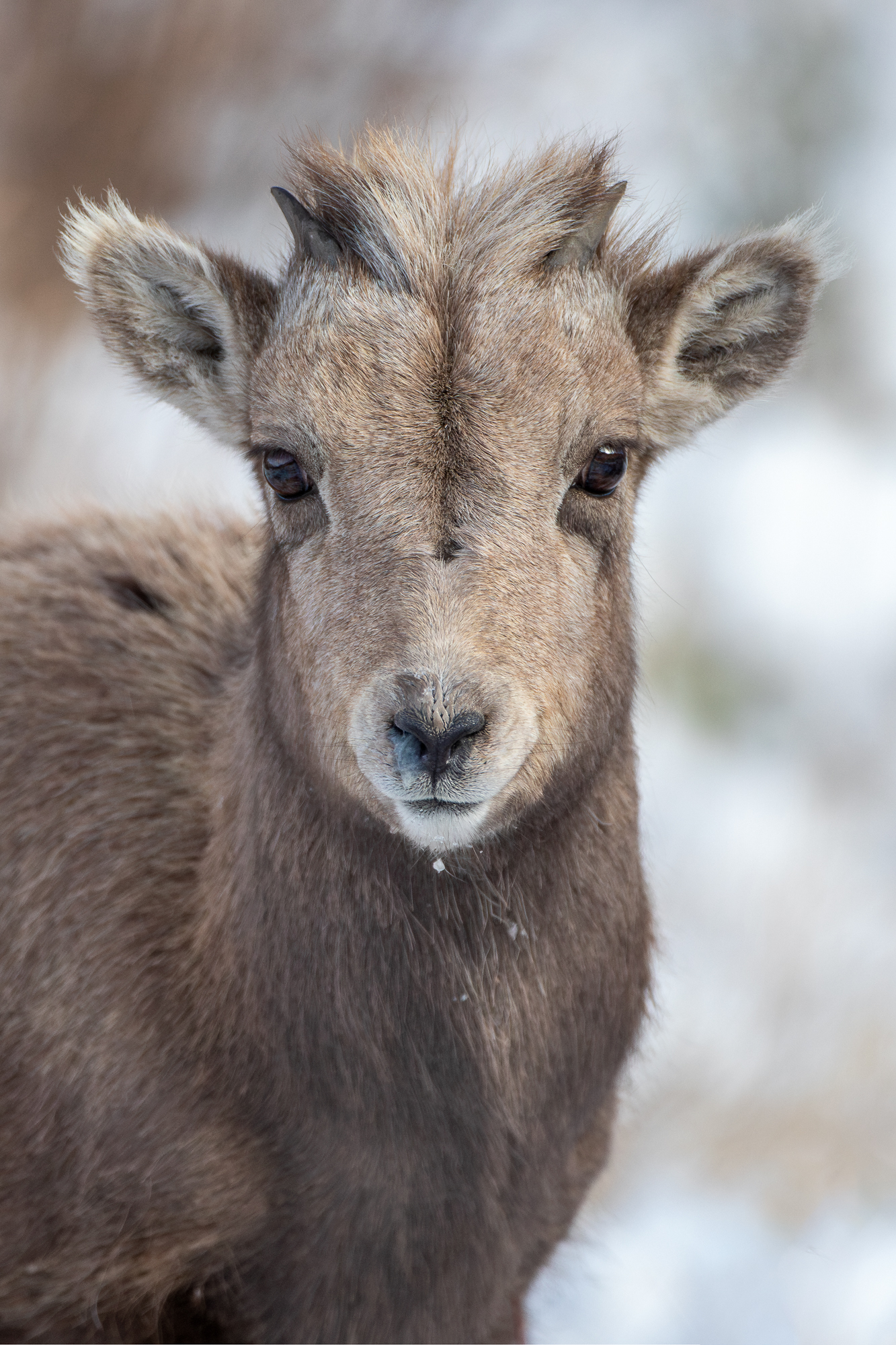
This bighorn lamb is likely 6 months old, born in the spring when food is abundant. The runny nose may seem benign, reminding one of human children in the winter.
But this could also be an ominous sign. Bighorn sheep are prone to bacterial pneumonia. Unknown in North America until Europeans arrived with domesticated sheep, bighorn sheep have little resistance to these pneumonias. It usually starts in a young lamb such as this, but quickly spreads to others in the population.
Pnuemonia is thought to be the major factor in the decline of the bighorn sheep population, now 10% of its traditional size. Before the 19th century, there were an estimated 1.5–2 million bighorn sheep in North America. By 1900, human encroachment had reduced the population to a few thousand. But bighorn sheep populations have made a comeback thanks to conservation efforts, and today approximately 80,000 remain. Separation of domestic sheep and bighorn is the key to long-term security and recovery of the species.

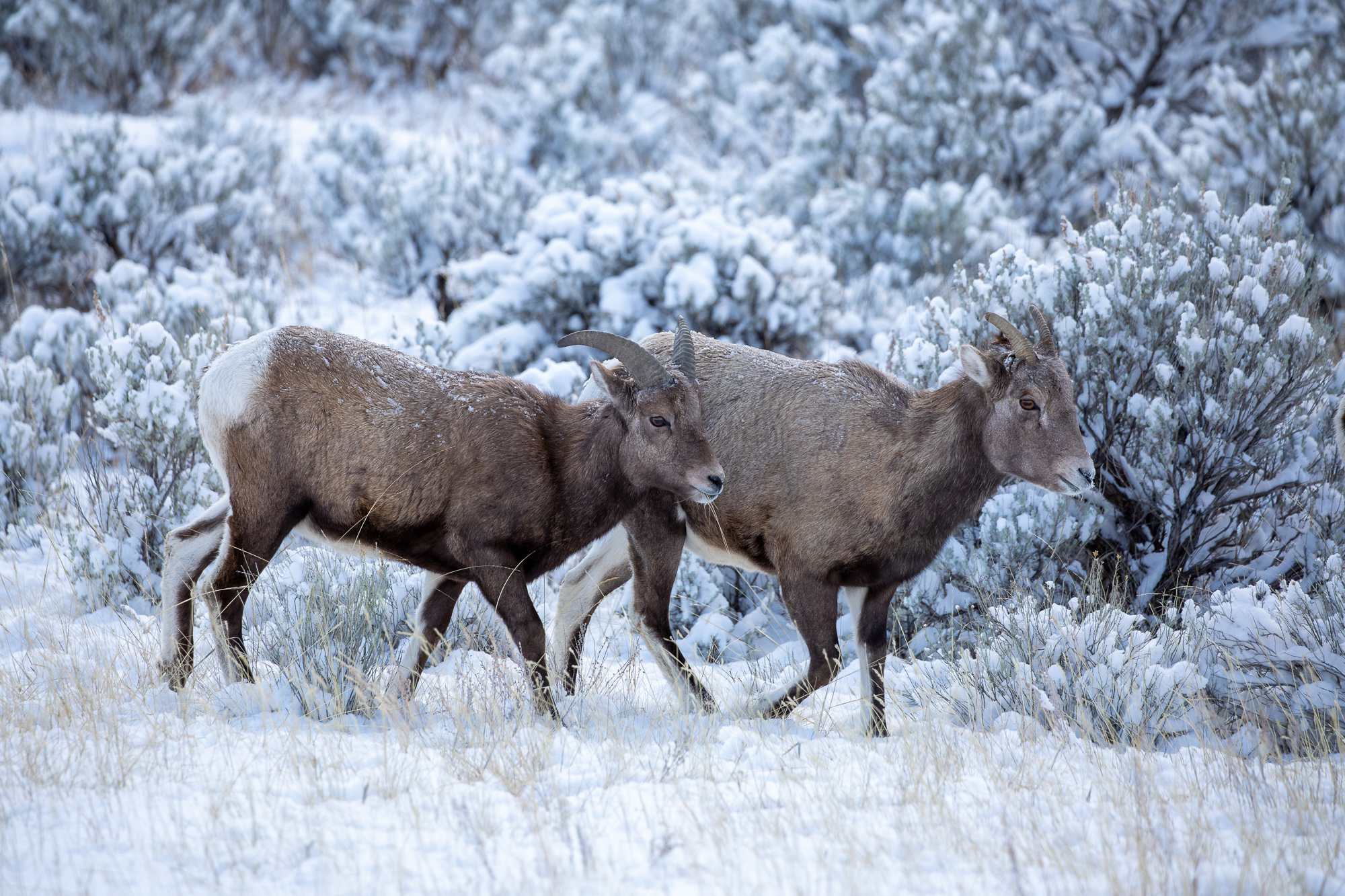
Bighorn sheep are one of the marque species inhabiting the Rocky Mountains. They exhibit a diversity of remarkable behaviors that are quite interesting to observe. Expect to go into the high-country to find them in the warmer months, but they can be readily seen and observed at lower elevations as winter sets in.